
Best Affordable Espresso Machine of 2026 for Rich Crema
Pull rich shots with the best affordable espresso machine in October 2026. Compare rapid heating thermoblocks, steam wands, and compact designs.
 By Jason Sarley
Updated October 3, 2026
By Jason Sarley
Updated October 3, 2026

Escaping Sour Morning Shots and Thin Crema
Nothing ruins an early morning faster than a lukewarm, sour espresso shot that trickles out with zero crema. Many coffee lovers settle for bitter coffee simply because commercial espresso setups carry four-figure price tags and demand half their counter space. You do not need to break the bank to pull balanced, syrupy shots right in your kitchen. Spotting the best affordable espresso machine comes down to evaluating core hardware like stable thermoblock heating systems, reliable pump pressure, and responsive steam wands that texture milk rather than scorch it. Based on product specifications and user feedback, modern entry-level units now pack features that were once reserved for commercial espresso bars.
Getting delicious morning flat whites also requires matching your machine with capable accessories. While dialing in fresh beans with retentionless coffee grinders helps prevent stale channeling, having a brewer with PID digital temperature regulation and low-pressure pre-infusion ensures balanced water flow through your coffee puck. Our analysis of boiler wattage, portafilter dimensions, and reservoir capacities reveals that today’s compact options deliver steady heat and silky microfoam without hogging your prep area. That means you can pull café-style double shots on tight schedules without second-guessing your water temperature.
| Award | Product | GCG Score About GCG ScoreThe GCG Score is our own rating from 0 to 10, based on performance, design and build, ease of use, and value. It reflects independent research and is never influenced by manufacturers, retailers, or affiliate commissions. Learn more › | |
|---|---|---|---|
| Best Overall |
CASABREWS 3700 Essential Stainless Steel Espresso
|
9.1/10 | Buy |
| Best Premium |
 CASABREWS CM5418 Compact Espresso Machine
|
8.9/10 | Buy |
| Best Budget |
 XIXUBX Espresso Machine, Compact Espresso Maker
|
8.8/10 | Buy |
| Best Value |
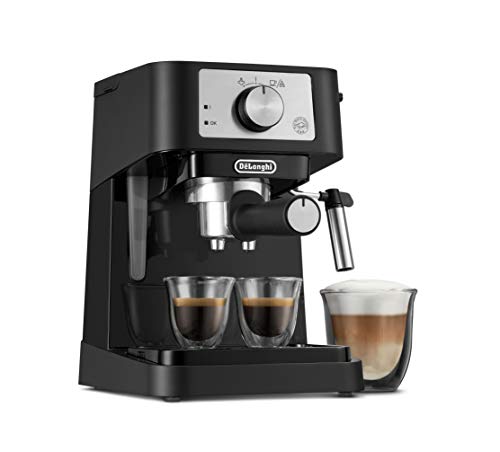 De'Longhi Stilosa Compact Manual Espresso Machine
|
8.6/10 | Buy |
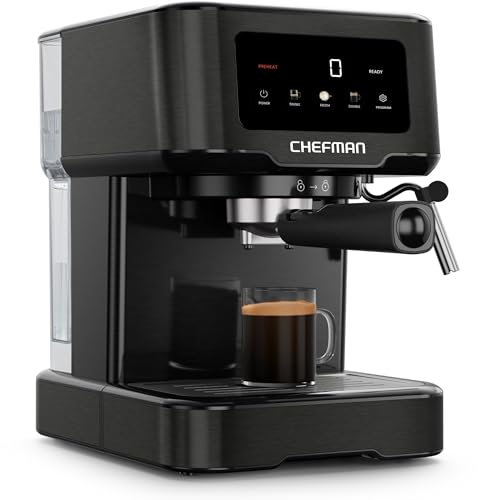 Chefman CraftBrew Espresso Machine
|
8.4/10 | Buy | |
 Arecovas Espresso Machine, 20 Bar Pressure
|
8.0/10 | Buy | |
 XIXUBX Espresso Machine with Milk Frother
|
8.0/10 | Buy | |
 AERCANA Espresso Machine 20 Bar
|
8.0/10 | Buy | |
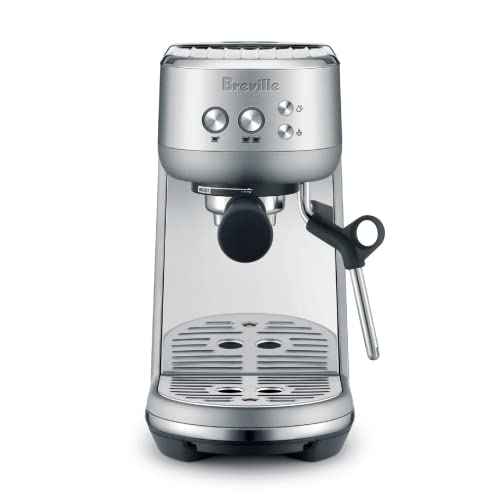 Breville BES450BSS Bambino Espresso Machine
|
8.0/10 | Buy |
Frequently Asked Questions About Best Affordable Espresso Machine
Can a 15-bar or 20-bar pump produce true café-quality espresso?
Yes, pumps rated between 15 and 20 bars provide ample headroom to maintain proper extraction pressure across dense coffee beds. While commercial café extraction typically targets 9 bars at the group head, domestic vibration pumps use higher initial ratings to overcome pressurized basket resistance and sustain consistent flow. Regulating your grind size and tamping evenly prevents channeling and ensures a thick layer of golden crema.
How fast do compact thermoblock espresso machines heat up for morning brewing?
Most modern compact thermoblock and thermocoil machines reach brewing temperature in under 30 seconds. Systems like Breville’s ThermoJet achieve brew-ready stability in as little as 3 seconds, whereas traditional single boilers require 5 to 10 minutes to stabilize. Pairing fast warmup brewers with mini electric burr grinders streamlines early morning workflows when counter space and time are tight.
Do you need pressurized or non-pressurized baskets with an affordable espresso maker?
Pressurized dual-wall baskets work best for pre-ground coffee, while non-pressurized single-wall baskets yield superior flavor clarity when using fresh beans. Dual-wall baskets create artificial resistance, helping beginners produce crema even with uneven supermarket grinds. Switching to single-wall baskets allows you to dial in precise brew ratios as your barista technique develops.
Why does an espresso machine need cooling down before brewing after steaming milk?
Single boiler and thermoblock machines must purge excess heat because milk steaming requires higher steam temperatures than espresso extraction. Brewing immediately after frothing pushes overheated water through the coffee puck, scorching delicate grounds and creating bitter flavors. Running a quick blank water flush through the group head resets internal temperatures and protects delicate coffee notes.
How often should you run a descaling cycle on a home espresso maker?
Descaling every two to three months prevents mineral buildup from restricting internal water lines and damaging heating elements. Hard water accelerates scale formation inside thermoblocks and boilers, leading to weak steam pressure and erratic brew temperatures. Machines serving busy kitchens or hosting large brunch batches, like those supplied by large capacity home coffee grinders, benefit from monthly maintenance and filtered water reservoirs.
About the author
Jason Sarley is a coffee professional, writer, roaster, and licensed Q Grader with extensive experience in cupping and coffee evaluation. He also holds professional roasting credentials and has worked closely with innovative brewing technology, giving him practical insight into how brewing equipment, extraction methods, and coffee quality come together in the cup.