
Best Introductory Espresso Machine of 2026 for Rich Crema
Pull cafe-quality shots at home with the best introductory espresso machine for October 2026, offering steady heat and velvety microfoam.
 By Jason Sarley
Updated October 3, 2026
By Jason Sarley
Updated October 3, 2026

Watery shots and thin, bubbly foam often ruin the excitement of making coffee at home. Inconsistent brew temperatures and weak steam pressure turn morning lattes into lukewarm disappointments. Based on our detailed comparison of boiler heating systems, portafilter dimensions, and user feedback, picking the right setup eliminates that guesswork. Investing in the best introductory espresso machine gives you stable PID temperature control, reliable extraction pressure, and a dedicated steam wand to craft true microfoam. Paired with quality beans like bold dark roast coffee, a capable entry unit unlocks sweet, rich crema right on your counter.
Compact counter footprints and quick heat-up cycles matter just as much as shot quality for daily routines. Modern entry setups balance pressurized filter baskets for easy brewing with unpressurized options that expand your skills. Research into manufacturer specifications shows that reliable thermoblock systems minimize warm-up delays so you can pull balanced shots in minutes. Straightforward water reservoirs and descaling alerts ensure that routine maintenance stays simple. Choosing an accessible machine lets you skip commercial drive-thru lines without facing an intimidating learning curve.
| Award | Product | GCG Score About GCG ScoreThe GCG Score is our own rating from 0 to 10, based on performance, design and build, ease of use, and value. It reflects independent research and is never influenced by manufacturers, retailers, or affiliate commissions. Learn more › | |
|---|---|---|---|
| Best Overall |
Breville BES870XL Barista Express Espresso
|
9.2/10 | Buy |
| Best Budget |
 CASABREWS 3700 Essential Stainless Steel Espresso
|
9.1/10 | Buy |
| Best Premium |
 PHILIPS 2300 Series Fully Automatic Espresso
|
9.1/10 | Buy |
 CASABREWS CM5418 Compact Espresso Machine
|
8.9/10 | Buy | |
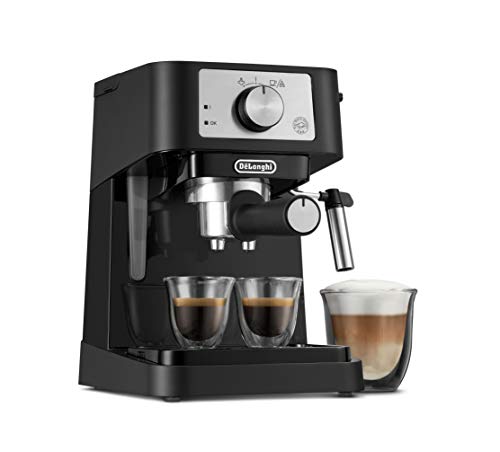 De'Longhi Stilosa Compact Manual Espresso Machine
|
8.6/10 | Buy | |
| Best Value |
 De'Longhi Classic Espresso Machine, Milk Frother
|
8.6/10 | Buy |
 De'Longhi Magnifica Duo Automatic Espresso
|
8.6/10 | Buy | |
 Breville BES870BTR Barista Express Espresso
|
8.3/10 | Buy | |
 Breville BES880BSS Barista Touch Espresso Machine
|
8.1/10 | Buy | |
 Arecovas Espresso Machine, 20 Bar Pressure
|
8.0/10 | Buy |
Frequently Asked Questions
Does a beginner need a built-in grinder on the best introductory espresso machine?
Not necessarily, but an integrated conical burr grinder streamlines morning workflow by grinding whole beans directly into the portafilter. Built-in grinders save precious kitchen counter space and minimize messy grounds transfer. Machines with dosing controls let new baristas pull consistent shots without buying separate expensive grinding gear.
What is the difference between pressurized and non-pressurized filter baskets?
Pressurized baskets use a dual-wall design with a single exit hole to generate artificial backpressure, making them forgiving with pre-ground supermarket coffee. Non-pressurized single-wall baskets require a dialed-in grind size and uniform tamp to extract properly. Beginners often start with pressurized baskets for reliable crema before upgrading to single-wall baskets for sweeter flavor nuances.
How much pump pressure is ideal for pulling balanced espresso shots?
Nine bars of water pressure at the coffee puck remains the gold standard for sweet, balanced espresso. While many entry machines advertise 15-bar or 20-bar Italian pumps, internal valves regulate that flow down to prevent harsh channeling. Stable water pressure ensures even saturation and rich crema without bitter over-extraction.
Can an entry-level espresso machine steam milk for latte art?
Yes, machines with manual steam wands easily texture milk into silky microfoam suitable for pouring latte art. Thermoblock heating elements quickly ramp up steam temperature after brewing espresso. Purging excess condensation before inserting the wand tip into your pitcher produces dry steam and smooth, velvety foam.
How much kitchen counter clearance do introductory machines require?
Most compact units need 12 to 14 inches of width and roughly 16 inches of height to clear standard 18-inch kitchen cabinets. Checking the accessibility of top-loading water reservoirs and bean hoppers prevents having to pull the machine forward every morning. Leaving extra clearance also provides room for accessories when brewing mellow roast profiles or specialty drinks.
About the author
Jason Sarley is a coffee professional, writer, roaster, and licensed Q Grader with extensive experience in cupping and coffee evaluation. He also holds professional roasting credentials and has worked closely with innovative brewing technology, giving him practical insight into how brewing equipment, extraction methods, and coffee quality come together in the cup.