
How to Use a Hand Coffee Grinder: Practical Setup and Grinding Guide for 2026
Master how to use a hand coffee grinder with our November 2026 guide on dialing grind settings, smooth hand cranking, and maintaining ceramic conical burrs.
 By Peter Giuliano
Updated November 13, 2026

Freshly roasted whole coffee beans hold delicate aromatic oils that degrade quickly once exposed to oxygen, which makes immediate grinding essential for a vibrant morning cup. Learning how to use a hand coffee grinder gives you direct mechanical control over particle size without the high motor heat or excessive kitchen counter footprint of motorized appliances. Manual hand mills rely on sharp cutting burrs rather than high-speed spinning blades, gently crushing beans into consistent granules that extract evenly across pour-over cones, immersion pots, and travel brewers.
Many beginners struggle with manual mills because adjustment mechanisms can feel mysterious, especially when switching between fine espresso powders and coarse French press grounds. Selecting reliable manual burr grinders for filter brewing provides a solid foundation, but achieving clear flavor clarity still depends on proper technique, steady cranking cadence, and correct stabilization. When you dial in your grind settings methodically and maintain your internal burr assembly, manual hand grinding becomes a quiet, rewarding ritual that produces exceptional coffee anywhere.
| Award | Product | GCG Score About GCG ScoreThe GCG Score is our own rating from 0 to 10, based on performance, design and build, ease of use, and value. It reflects independent research and is never influenced by manufacturers, retailers, or affiliate commissions. Learn more › | |
|---|---|---|---|
| Best Overall |
HZBSGZR Mini Ceramic Burr Coffee Grinder
|
8.9/10 | Buy |
| Best Budget |
 Rsoilch Manual Coffee Grinder with Ceramic Burrs |
8.4/10 | Buy |
| Best Premium |
 CEVING Mini Manual Coffee Grinder with 40 External |
8.4/10 | Buy |
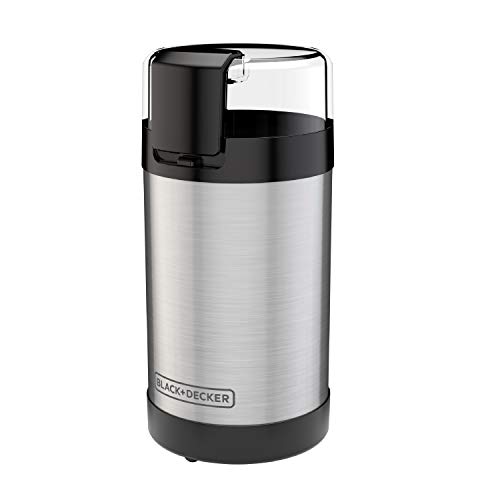 BLACK+DECKER One Touch Electric Coffee Grinder |
8.1/10 | Buy | |
 Rsoilch Manual Ceramic Burr Coffee Grinder |
8.0/10 | Buy |
HZBSGZR Mini Ceramic Burr Coffee Grinder
Built for travel and compact kitchens, this manual grinder combines a ceramic conical burr with 40 stepped grind settings. Its clear glass catch jar and 30-gram capacity make it a practical choice for single-serving pour overs or French press on the go.
Pros
- Wide range of 40 grind settings
- Durable ceramic burr resists heat buildup
- Lightweight, compact design suited for travel
- Transparent glass jar helps monitor grinding progress
Cons
- 30-gram capacity requires multiple batches for large pots
- Glass catch jar can break during rugged travel
- Manual cranking requires physical effort
Rsoilch Manual Coffee Grinder with Ceramic Burrs
The Rsoilch manual coffee grinder provides a compact, travel-friendly solution for grinding fresh whole bean coffee across 40 adjustable settings from espresso to French press. Featuring a ceramic conical burr and a 25-gram clear glass grounds container, it is an economical pick for solo brewers, campers, and office coffee stations.
Pros
- 40 stepped grind settings offer versatile particle adjustments for espresso, pour-over, and French press.
- Ceramic conical burr design crushes beans smoothly without generating electrical motor heat that could compromise delicate coffee aromas.
- Clear glass collection jar prevents static cling and provides clear visibility of ground volume.
- Compact, lightweight build (11.3 ounces) and power-free operation make it highly portable for travel and outdoor brewing.
Cons
- 25-gram bean capacity is limited to single servings and is impractical for multi-cup batch drip coffee pots.
- Manual hand cranking requires physical effort and extra time, particularly for finer espresso grinds or dense light-roasted beans.
- Ceramic burrs may produce slightly more fines at coarser settings compared to premium stainless steel burr sets.
CEVING Mini Manual Coffee Grinder with 40 External
The CEVING Mini Manual Coffee Grinder features a conical ceramic burr, 30g capacity, and an external 40-step adjustment ring that eliminates messy internal dials. Weighing just 325 grams, it is an accessible, travel-friendly choice for campers, office brewers, and pour-over enthusiasts upgrading to fresh whole beans.
Pros
- External 40-click adjustment ring eliminates the mess of internal dial adjustments
- Conical ceramic burrs generate minimal frictional heat during manual operation
- Lightweight 325g body makes it easy to pack for camping, RVs, and travel
- Generous 30g capacity handles everyday single-pour and two-cup recipes
- Modular three-piece design allows quick disassembly for dry brush maintenance
Cons
- Stepped click increments may limit micro-tuning resolution for unpressurized espresso machines
- Ceramic burrs require more manual cranking effort on dense light-roast beans compared to steel burrs
- Not recommended for water washing, requiring dry brush or cloth cleaning only
BLACK+DECKER One Touch Electric Coffee Grinder
The BLACK+DECKER One Touch Coffee Grinder provides a straightforward, 150-watt solution for grinding up to 2/3 cup of whole coffee beans, making it ideal for automatic drip and French press brewers. It is well suited for budget-conscious home drinkers seeking an easy, space-saving way to grind fresh whole beans every morning without complicated settings.
Pros
- Stainless steel blades and grinding bowl provide durable, long-lasting performance for whole coffee beans and spices
- One-touch push-button control makes it simple to pulse and customize grind consistency from coarse to fine
- Holds up to 2/3 cup of whole coffee beans, enough to brew a full pot in an automatic drip machine
- Integrated lid-locking safety feature prevents blade activation until the cover is firmly secured
- Compact 3.5 x 3.4 x 7.28 inch footprint occupies minimal counter space in home kitchens
Cons
- Blade grinding naturally produces less particle size uniformity than precision burr grinders, creating fines that may affect pour-over clarity
- Not designed to produce the consistent, ultra-fine grind required for non-pressurized espresso machines
- Dark, oily whole beans can leave residue around the blade bowl that requires frequent wiping between uses
Rsoilch Manual Ceramic Burr Coffee Grinder
Built with a stainless steel body and ceramic burr, this portable hand grinder features five adjustable settings suitable for brew methods from espresso to French press. Weighing just 0.65 pounds, it is well suited for camping trips or compact kitchen setups.
Pros
- Sturdy stainless steel exterior
- Five selectable grind settings
- Highly portable and lightweight
- Disassembles quickly for easy washing
Cons
- Only five grind levels limits precise espresso dialing
- Manual cranking requires effort for larger batches
- Ceramic burrs grind slower than steel burrs
Mastering the Manual Coffee Grinder: From Dial-In to Daily Workflow
Achieving a balanced cup of coffee requires understanding the mechanical connection between your grinder components and the physical extraction process. Using a manual hand grinder is straightforward once you know how the burrs engage, how adjustments shift particle size, and how to maintain steady rotation. This guide walks you through every stage of operating a manual coffee mill, from your initial zero-point adjustment to routine cleaning.
Understanding the Mechanical Anatomy of a Manual Burr Mill
A manual hand grinder consists of five primary components that work together to produce uniform coffee grounds. At the top sits the hopper, which feeds whole coffee beans into the central grinding chamber. Running down the center of the body is a drive axle, typically secured by one or two stabilization bearings that keep the shaft centered during rotation.
The cutting heart of the unit includes an inner conical burr and a matching outer ring burr. As you turn the detachable hand crank, the drive shaft rotates the inner burr against the stationary outer burr, drawing beans downward and crushing them through progressively narrower gaps. Ground coffee drops directly into the lower catch jar, which is often made of glass or threaded metal to prevent loose powder spills.
Most compact travel grinders, such as the HZBSGZR Mini Manual Coffee Grinder with Ceramic and the Rsoilch Manual Coffee Grinder With Ceramics Burr, utilize ceramic conical burrs. Ceramic materials stay sharp across extended use and transfer minimal friction heat to the beans during manual operation. Understanding this layout helps you spot misalignments, adjust tension properly, and disassemble the unit without losing small internal springs.
How to Adjust and Calibrate Grind Size Settings
Grind size adjustment controls the physical distance between the inner and outer burrs, dictating the coarseness of your coffee grounds. Before you can set your desired brew setting, you must first establish your grinder mechanical zero point. Remove the grounds catch container and turn the adjustment dial clockwise until the inner burr rests snugly against the outer burr, stopping all free rotation.
Never force the dial tighter once you feel firm resistance, as overtightening can chip ceramic cutting edges. From this closed zero reference position, rotate the adjustment wheel counterclockwise while counting each audible click or marked division. Grinders with external collars, like the CEVING Mini Manual Coffee Grinder With 40, allow you to select numbered settings directly on the outer body without unscrewing the grounds chamber.
Other traditional travel models place a star-shaped adjustment nut beneath the burr assembly inside the lower chamber. On internal mechanisms, each click widens the burr gap by a set distance, allowing you to move between fine espresso powder and coarse cold brew particles. Keeping a small notebook of your click counts helps you return to preferred settings quickly when switching between different coffee beans.
Matching Grind Settings to Different Brewing Methods
Different brewing methods require specific particle surface areas to balance water contact time against extraction rate. Finer grinds increase overall surface area, causing coffee compounds to dissolve quickly, while coarser grinds slow down extraction to prevent bitter flavors. Matching your burr gap to your brewer prevents muddy cups, sour notes, and stalled filter papers.
For immersion brewing methods like French press, you need coarse granules resembling sea salt to allow clean separation through metal mesh filters. If you are preparing a large batch using a dedicated manual grinder for cold brew, selecting a wider setting prevents excessive micro-fines from creating a chalky mouthfeel during extended steep times. A coarse setting also reduces the physical effort required to turn the hand crank.
Pour-over cones and automatic drip brewers demand a medium to medium-fine setting resembling table salt or granulated sand. This consistency creates sufficient resistance for hot water to extract sweet sugars and delicate aromatics within a standard three to four minute drawdown window. For stovetop moka pots or manual espresso baskets, use a fine grind setting, keeping in mind that ceramic burrs produce higher rotational resistance at narrow tolerances.
Dosing Whole Beans and Loading the Grinder Hopper
Precision brewing begins with accurate bean dosing, because volumetric scoops vary wildly based on roast density and bean size. Dark roast beans puff up during roasting and occupy more physical volume, whereas dense light roasts remain small and heavy. Using a compact digital kitchen scale ensures your coffee-to-water brew ratio remains consistent from cup to cup.
Most portable manual grinders accommodate between twenty and thirty grams of whole beans per batch. The CEVING Mini Manual Coffee Grinder With 40 and the HZBSGZR Mini Manual Coffee Grinder with Ceramic both feature thirty-gram hopper capacities, which comfortably yields one large mug or two smaller filter cups. Never overfill the hopper past the top rim, as stray beans can jam beneath the crank handle attachment point.
After weighing your dose, pour the beans into the upper chamber and place the top lid securely in position before attaching the handle. Operating the grinder without the lid can cause bean fragments to pop out across your counter, an issue known as popcorn effect. Ensuring the lower catch jar is firmly threaded onto the frame prevents accidental drops while grinding.
Proper Grinding Posture and Cranking Technique
Holding a manual grinder correctly reduces wrist fatigue and prevents uneven particle distribution caused by axle tilt. Grip the main grinder body firmly with your non-dominant hand around the center of the cylinder. Placing your thumb along the upper barrel provides leverage, keeping the entire unit vertical throughout the grinding cycle.
Grasp the handle knob lightly between your dominant fingers and rotate in smooth, continuous clockwise circles. Avoid jerky, aggressive motions or rocking the grinder body back and forth, as lateral torque places unnecessary strain on the center axle bearings. Maintaining a steady cadence between sixty and eighty rotations per minute allows the conical burrs to draw beans down naturally.
If you grind very hard, high-altitude light roast beans, grinding can feel physically demanding due to bean cell density. In these situations, resting the base of the grinder firmly against a stable countertop or kitchen table provides extra mechanical stability. You will feel a sudden drop in rotational resistance once the final bean clears the burr chamber, signaling that your dose is fully ground.
Troubleshooting Common Hand Grinding Problems
Even seasoned coffee brewers encounter minor hiccups during manual grinding sessions. One common issue is static electricity, which causes feather-light chaff and fine coffee dust to cling stubbornly to the catch jar walls and burr exit. Tapping the side of the container gently on your counter before unscrewing it settles the grounds and keeps your coffee bar tidy.
Another frequent frustration occurs when the crank handle suddenly locks up or becomes impossible to turn. This jamming usually happens when an unusually hard bean wedges directly into the burr intake flutes at an awkward angle. Never force the crank forward with excessive power; instead, turn the handle backward a half-turn counterclockwise to dislodge the bean, then resume normal clockwise rotation.
If your pour-over drawdown stalls or your coffee tastes unpleasantly bitter, your grinder may be producing excessive micro-fines. While specialized manual grinders for extra-fine grinding excel at producing dense, powdery beds for cezve brewing, standard filter preparation requires cleaner particle separation. Inspect your burr assembly to ensure the central spring is seated squarely and that no coffee debris is tilting the inner cone.
Manual Conical Burrs Versus Electric Blade Grinders
Many consumers transition to manual hand mills after experiencing inconsistent results with low-cost electric blade appliances. Motorized options like the BLACK+DECKER One Touch Coffee Grinder offer rapid push-button convenience using high-speed spinning stainless steel blades. However, spinning blades chop coffee beans randomly rather than crushing them uniformly, resulting in a wide mixture of large boulders and powdery dust.
This bimodal blade distribution leads to uneven extraction, where small fines over-extract into harsh bitterness while large boulders under-extract into sour flavors. In contrast, manual conical burrs crush beans through a calibrated gap, yielding far narrower particle size distribution curves. The controlled manual action also generates negligible friction heat, preserving volatile aromatic oils that electric motor blades can warm up during extended runs.
Manual grinders also operate almost silently compared to high-decibel universal motors, making them ideal for early mornings in quiet households. While electric blade units grind thirty grams in just seconds, manual hand mills trade pure speed for cup clarity, portability, and zero electrical reliance. For coffee lovers focused on balanced extraction, the physical effort of hand grinding delivers noticeably better flavor per dollar spent.
Routine Cleaning and Deep Burr Maintenance
Over time, residual coffee oils and fine powder accumulate along burr flutes, turning stale and dulling your cup sweetness. Daily maintenance requires minimal effort; simply tap out loose grounds after each use and use a natural-bristle brush to sweep the underside of the burr chamber. Transparent glass catch jars, like those on the Rsoilch Manual Coffee Grinder With Ceramics Burr, make it easy to spot lingering residue.
Every few weeks, perform a basic teardown by unscrewing the lower adjustment nut and removing the inner conical burr and tension spring. Keep all small washers, springs, and bearings lined up on a clean cloth in the exact order you removed them. Use a dry brush or dry microfiber cloth to wipe coffee buildup from the ceramic surfaces and internal threads.
Avoid washing metal drive axles and internal ball bearings with water, as lingering moisture can compromise lubrication and cause corrosion. If your manual grinder features fully ceramic burrs and a stainless steel body, like the compact Rsoilch Manual Coffee Grinder With Ceramics Burr, parts can be rinsed occasionally if allowed to dry completely before reassembly. Ensure the inner cone slips squarely onto the keyed axle shaft when putting everything back together.
Practical Takeaways for Daily Manual Grinding Success
Integrating a manual coffee grinder into your daily kitchen routine transforms morning coffee from an automatic chore into an intentional sensory ritual. By taking time to find your true zero point, counting your adjustment clicks carefully, and holding the grinder body upright, you unlock the full flavor potential of your favorite whole beans. The near-zero retention of hand mills guarantees that every single gram of freshly roasted coffee drops cleanly into your brewing chamber.
Whether you brew a bright pour-over at home or prepare a hot immersion cup at a remote campsite, manual grinders provide unmatched reliability without power cords or noisy motors. Regular dry brushing and thoughtful dialing protect your burrs from premature wear while keeping every extraction sweet and balanced. With these practical techniques in hand, your manual grinder will deliver delicious, café-quality coffee every single morning.
About the author
Peter Giuliano is a longtime specialty coffee professional, educator, researcher, and writer whose career spans barista work, roasting, cupping, coffee buying, training, and coffee science. With more than three decades of industry experience, he brings a research-driven perspective to brewing, extraction, sensory evaluation, and the factors that influence coffee quality.