
How to Use an Electric Coffee Grinder: Practical Guide for 2026
Learn how to use an electric coffee grinder for balanced extraction and better morning coffee in this practical November 2026 brewing guide.
 By Jason Sarley
Updated November 13, 2026
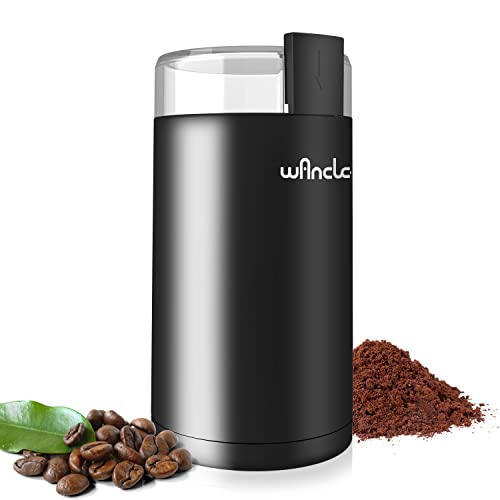
Whole coffee beans protect delicate aromatic oils from oxidation, but breaking them down evenly is where most brewing problems begin. Learning how to use an electric coffee grinder correctly makes the difference between an astringent, bitter mug and a clean, aromatic extraction. Compact electric grinders spin sharp stainless steel blades at high velocities to chop whole beans into brewable grounds in just seconds. While larger batch setups and high-capacity coffee grinders handle huge volumes with automated hoppers, smaller countertop units require hands-on control over dose, duration, and rhythm. Understanding how these compact machines work gives you direct control over your final cup.
Most entry-level push-button grinders rely on one-touch operation, meaning you control particle size purely through timing and pulsing rather than fixed internal dials. Holding the power switch down continuously often heats up the grinding chamber and generates excessive micro-fines that clog coffee filters. A controlled pulse technique and gentle container shaking distribute whole beans evenly across the spinning blades, helping you achieve far more consistent results. Taking a minute to dial in your grinding workflow transforms your daily coffee routine from inconsistent guesswork into an effortless, repeatable habit.
| Award | Product | GCG Score About GCG ScoreThe GCG Score is our own rating from 0 to 10, based on performance, design and build, ease of use, and value. It reflects independent research and is never influenced by manufacturers, retailers, or affiliate commissions. Learn more › | |
|---|---|---|---|
| Best Overall |
Wancle Electric Coffee Grinder
|
8.9/10 | Buy |
| Best Premium |
 SHARDOR One Touch Electric Coffee Grinder |
8.4/10 | Buy |
| Best Value |
 BLACK+DECKER One Touch Electric Coffee Grinder |
8.1/10 | Buy |
 Hamilton Beach Fresh Grind 12-Cup Grinder |
8.1/10 | Buy | |
| Best Budget |
 Amazon Basics Electric Blade Coffee Grinder |
7.8/10 | Buy |
Wancle Electric Coffee Grinder
The Wancle Electric Coffee Grinder offers an accessible one-touch milling solution for up to 60 grams of whole roasted coffee beans, utilizing a 150-watt copper motor and durable stainless steel blades. It is well suited for drip coffee drinkers, French press fans, and cold brew makers seeking quick, push-button freshness without complex grinder adjustments.
Pros
- Simple one-touch operation provides effortless push-button grinding for everyday whole bean brewing.
- Transparent lid allows real-time visual inspection of bean breakdown and grind texture.
- Convenient 60-gram capacity easily handles daily doses for drip coffee, pour-over, or French press.
- Compact 3.5-inch diameter footprint occupies minimal counter space in home kitchens or offices.
- Includes a dedicated cleaning brush to sweep out dry grounds and reduce oil accumulation.
Cons
- Blade grinding mechanism produces variable particle sizes with fines, making it unsuitable for dialing in non-pressurized espresso.
- Non-removable stainless steel grinding bowl requires careful manual wiping and dry brushing rather than direct water submersion.
- Dark, oily roasted beans may leave residue on the blades that requires frequent cleaning between uses.
SHARDOR One Touch Electric Coffee Grinder
Designed for grinding whole coffee beans for daily drip, pour-over, and French press brewing, this compact SHARDOR electric grinder features a quiet 60 dB motor and a removable stainless steel cup. It offers simple press-to-start pulse control, making it a practical and accessible choice for domestic coffee drinkers stepping up from pre-ground coffee to freshly ground whole beans.
Pros
- Quiet 60 dB motor reduces loud morning noise compared to standard domestic blade grinders
- Removable stainless steel grinding bowl is dishwasher-safe for effortless cleanup and oil removal
- Simple press-to-start pulse operation gives the user direct manual control over grinding time
- Versatile dry grinding capability handles whole coffee beans, herbs, nuts, and whole spices
- Backed by a 2-year manufacturer warranty for extended domestic peace of mind
Cons
- Blade design creates less uniform particle sizes than dedicated burr grinders, which can affect delicate espresso extraction
- Manual pulse control requires close attention to grind time to prevent over-processing into excessive fines
- Single bowl capacity requires grinding in separate batches when preparing large volumes for cold brew pitchers
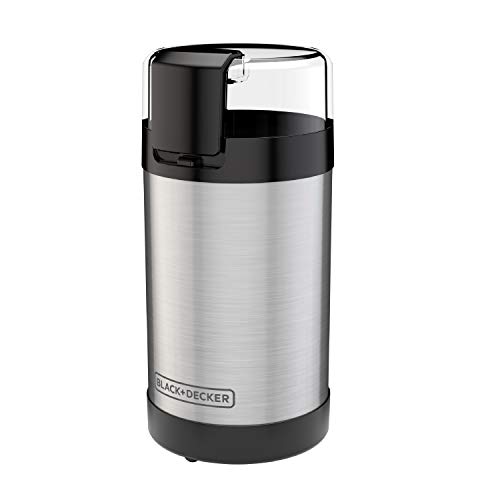
BLACK+DECKER One Touch Electric Coffee Grinder
The BLACK+DECKER One Touch Coffee Grinder provides a straightforward, 150-watt solution for grinding up to 2/3 cup of whole coffee beans, making it ideal for automatic drip and French press brewers. It is well suited for budget-conscious home drinkers seeking an easy, space-saving way to grind fresh whole beans every morning without complicated settings.
Pros
- Stainless steel blades and grinding bowl provide durable, long-lasting performance for whole coffee beans and spices
- One-touch push-button control makes it simple to pulse and customize grind consistency from coarse to fine
- Holds up to 2/3 cup of whole coffee beans, enough to brew a full pot in an automatic drip machine
- Integrated lid-locking safety feature prevents blade activation until the cover is firmly secured
- Compact 3.5 x 3.4 x 7.28 inch footprint occupies minimal counter space in home kitchens
Cons
- Blade grinding naturally produces less particle size uniformity than precision burr grinders, creating fines that may affect pour-over clarity
- Not designed to produce the consistent, ultra-fine grind required for non-pressurized espresso machines
- Dark, oily whole beans can leave residue around the blade bowl that requires frequent wiping between uses
Hamilton Beach Fresh Grind 12-Cup Grinder
Compact and user-friendly, the Hamilton Beach Fresh Grind processes beans for up to 12 cups of coffee alongside dried herbs and seeds. Its removable dishwasher-safe bowl and hideaway cord storage make it a practical, low-maintenance option for everyday countertops.
Pros
- Dishwasher-safe bowl simplifies cleanup
- Integrated cord storage keeps countertops organized
- Capable of grinding coffee, spices, and seeds
- Simple press-to-grind button control
Cons
- Blade design lacks adjustable grind size settings
- Manual pulse control requires visual monitoring
Amazon Basics Electric Blade Coffee Grinder
Equipped with stainless steel blades and a compact footprint, this Amazon Basics grinder processes 30 grams of beans or whole spices in about 10 seconds. Its transparent safety lid lets you monitor grind consistency directly, making it a practical choice for single-pot drip coffee.
Pros
- Fast 10-second grinding for drip coffee
- Durable stainless steel cutting blades
- Handles herbs, spices, and nuts easily
- Transparent lid shows progress clearly
Cons
- Limited 30-gram capacity per batch
Mastering Your Electric Coffee Grinder for Better Coffee
Operating an electric coffee grinder involves much more than simply loading beans and holding down a button until the motor stops. The way you measure your dose, manage grinding pulses, and handle the appliance directly dictates how water extracts soluble flavor compounds from the resulting grounds. Mastering a few fundamental operating habits helps you avoid the common pitfalls of muddy brew beds, bitter astringency, and frustrating static mess. The following operational guidelines explain how to achieve balanced extraction, protect your equipment, and streamline your morning brewing routine.
Understanding How Electric Blade Mills Cut Coffee Beans
Electric blade coffee grinders function differently from conical or flat burr machines. Instead of crushing coffee beans between precision cutting rings, a blade grinder relies on a dual-prong stainless steel blade spinning at rapid velocities. These blades impact brittle roasted beans repeatedly, shattering them into smaller fragments through sheer kinetic force. Units equipped with 150-watt motors, such as those found in Wancle and BLACK+DECKER models, deliver the high rotational torque necessary to slice through dense whole beans instantly.
Because the cutting action relies on random impacts, the resulting grounds naturally produce a wide particle size distribution. Some portions of the bean shatter into microscopic dust called fines, while other fragments remain relatively large boulders. Continuous friction against high-speed metal also generates localized heat, which can scorch delicate volatile aromatic oils before water ever touches the coffee. Stainless steel grinding bowls help draw heat away from the beans, while transparent viewing lids allow you to observe particle reduction in real time.
Measuring Your Coffee Dose and Chamber Capacity
Accurate dosing is the foundation of any good cup of coffee. Using a digital kitchen scale to weigh whole beans before adding them to the grinding bowl yields far more consistent results than relying on volume scoops. Whole coffee beans vary in density and size depending on their roast profile, meaning two identical scoops of dark and light roast beans can differ significantly in actual weight. A digital scale ensures you start with the exact ratio of coffee to water required for your chosen brewing apparatus.
Overfilling the grinding bowl is one of the quickest ways to ruin your grind consistency. Grinders typically offer specific volume thresholds, such as the 30-gram capacity noted on Amazon Basics units or the 60-gram capacity featured on Wancle grinders. When you pack whole beans to the very top of the chamber, the beans lose the physical space required to circulate freely during operation. Leaving at least one-third of the grinding chamber empty creates a vortex that pulls circulating beans down toward the blades for even cutting.
The Pulse Technique: Step-by-Step Grinding Method
The pulsing method is the single most effective technique for mastering an electric blade grinder. Before initiating the motor, place your measured whole beans inside the bowl and ensure the lid is seated securely. Most modern units incorporate integrated safety switches or lid-locking mechanisms that prevent the high-speed blades from spinning unless the cover is locked into position. Once the lid is locked, depress the one-touch switch in controlled bursts lasting two to three seconds each rather than holding the button continuously.
Between each two-second pulse, release the button to let the blades stop and allow suspended grounds to settle back into the cutting path. Give the entire grinder a gentle horizontal swirl or light vertical tap on the countertop to redistribute unground bean fragments from the outer walls back into the center. Combining short pulsing bursts with gentle agitation creates an active mixing action inside the chamber. This simple rhythm dramatically reduces boulders and creates a surprisingly uniform particle distribution.
Dialing In Grind Duration for Different Brewing Methods
Because push-button electric grinders do not feature stepped adjustment collars, grind size is determined strictly by the total number of seconds you run the motor. For immersion methods like a French press or cold brew, you need coarse grounds that resemble sea salt. Pulsing the grinder for a total run time of roughly six to eight seconds usually achieves this coarse texture. When preparing immersion recipes, home brewers seeking unimodal precision often compare blade units against dedicated manual burr grinders for French press and pour-over to evaluate particle clarity.
Automatic drip coffee makers and flat-bottom pour-over drippers require a medium grind texture similar to coarse table salt or granulated sugar. Achieving this profile generally requires between ten and fourteen seconds of total pulsed runtime. Amazon Basics specifications, for example, note that grinding a single ounce of beans for drip coffee takes roughly ten seconds of motor operation. Inspecting the grounds through the transparent lid between pulses allows you to stop the process as soon as the coarse chunks disappear.
Finer brew methods like moka pots, AeroPress recipes, or reusable single-serve pods demand a medium-fine consistency. Running the grinder for fifteen to twenty seconds in short bursts breaks beans down into a softer, finer texture. However, using high-speed blade grinders for unpressurized espresso machines is generally not recommended. Blade grinders produce an unavoidable mix of micro-fines and boulders that causes water to channel aggressively through a high-pressure commercial espresso portafilter, resulting in sour and astringent extraction.
Managing Countertop Mess and Static Cling
Static electricity is a natural byproduct of grinding dry coffee beans at high velocities. As stainless steel blades shatter whole beans into thousands of pieces, the rapid friction generates a triboelectric charge on the grounds and the plastic lid. This static charge causes papery bean skins, known as chaff, along with powdery micro-fines, to stick stubbornly to the inside walls and ceiling of the grinding chamber. Opening the lid immediately after the motor stops often releases a small cloud of coffee dust across your clean countertop.
Mitigating static cling requires patience and a simple resting workflow. Once you finish your final pulsing burst, leave the grinder completely undisturbed for ten to fifteen seconds before removing the lid. This settling period gives the electrical charge time to dissipate naturally into the metal bowl and allows suspended coffee dust to fall back into the pile. Waiting just a few moments keeps your brewing station remarkably tidy without requiring extra cleanup tools.
Before unlatching the lid, give the top of the grinder two sharp taps with the palm of your hand. This dislodges grounds clinging to the underside of the plastic lid, dropping them directly into the bowl. Many grinders, including the Wancle unit, come packaged with a soft bristle brush designed specifically for sweeping clinging grinds cleanly into your brewer. Taking a moment to brush the chamber ensures every fraction of your weighed dose ends up in your brewing filter rather than wasted on the counter.
Cleaning Protocols for Removable and Fixed Grinding Bowls
Maintaining a clean grinding bowl prevents old, oxidized coffee oils from imparting stale flavors into your fresh morning brew. Electric grinders generally come in two distinct designs: removable stainless steel cups or fixed internal grinding chambers. Appliances like the SHARDOR and Hamilton Beach models feature removable grinding cups that twist and unlock from the motorized base. These removable cups offer exceptional convenience because you can carry the grounds straight to your brewer and wash the stainless steel vessel thoroughly.
Removable stainless steel bowls are frequently listed as dishwasher safe for the top rack, making deep cleaning straightforward. Quick daily rinses under warm water followed by thorough hand drying will prolong the luster and seal life of the cup assembly. Always ensure that the underside drive coupling on a removable bowl is bone-dry before reattaching it to the motorized base. Moisture trapped inside the motor connection can cause mechanical binding or corrosion over time.
Fixed-chamber grinders, such as the BLACK+DECKER model, require a different cleaning routine because the motor housing cannot be immersed in water. Always unplug the power cord from the wall outlet before cleaning a fixed-bowl grinder. Use a dry microfiber cloth or soft pastry brush to sweep loose grounds out of the bowl and from around the blade spindle. Maintaining clean equipment throughout your coffee bar, including properly cleaning reusable coffee filters, ensures that stale organic buildup never interferes with fresh cup clarity.
Preventing Cross-Contamination When Grinding Spices
Many multi-functional electric grinders are marketed to handle dry spices, herbs, seeds, and nuts in addition to coffee beans. Units with sharp stainless steel blades make quick work of hard peppercorns, flaxseeds, cinnamon sticks, and dried chilis. While having a single multipurpose kitchen appliance saves valuable cabinet space, grinding culinary spices in the same chamber used for coffee creates serious flavor transfer risks. Roasted coffee beans are exceptionally porous and will rapidly absorb pungent essential oils left behind by garlic, cumin, or curry.
To purge stubborn food odors and spice oils from the grinding chamber, pour two tablespoons of dry, uncooked white rice or rolled oats into the bowl. Pulse the rice for ten to fifteen seconds until it breaks down into a coarse powder. The dry starch acts as a natural scrubbing agent, absorbing lingering aromatic oils from the stainless steel blades and walls. Discard the rice powder, sweep the bowl with a clean brush, and wipe the interior with a dry paper towel before adding your coffee beans.
Important Safety Practices and Motor Duty Cycles
Electric coffee grinders house high-speed universal motors designed for short, intermittent duty cycles rather than continuous operation. Running a compact 150-watt motor continuously for multiple minutes without a break causes heat to build up rapidly inside the protective housing. If you notice the base of the machine becoming hot to the touch or detect a faint electrical smell, stop grinding immediately and allow the motor to cool for at least ten minutes. Respecting these operational duty cycles preserves the motor windings and prevents premature appliance failure.
Electrical and mechanical safety also requires strict moisture control and mindful handling. Never rinse the motorized base under a running faucet, submerge the appliance, or operate the switch with wet hands. Unplug the power cord from the wall outlet before cleaning near the sharp blades or clearing jammed beans from the spindle. Never attempt to bypass lid interlock mechanisms or insert utensils into the bowl while the machine is connected to electrical power.
Final Practical Takeaway for Balanced Daily Brewing
Evaluating your ground coffee before pouring it into your brewer provides immediate feedback on your grinding technique. Take a small pinch of the ground coffee from the bowl and spread it across a clean surface. Checking for large unground bean shards confirms whether the chamber was overfilled, while examining fine dust reveals if your pulse durations were too long. Making small adjustments to your pulse timing by a single second lets you fine-tune the extraction flow rate for your coffee maker.
Mastering an electric coffee grinder is an easy, rewarding skill that unlocks fresh aroma and vibrant flavor from your favorite whole beans. By measuring accurate doses, executing short controlled pulses, agitating the chamber, and maintaining clean blades, you gain total control over your final cup. These simple, mindful adjustments eliminate kitchen guesswork and ensure that every pot you brew delivers rich, satisfying coffee to start your day.
About the author
Jason Sarley is a coffee professional, writer, roaster, and licensed Q Grader with extensive experience in cupping and coffee evaluation. He also holds professional roasting credentials and has worked closely with innovative brewing technology, giving him practical insight into how brewing equipment, extraction methods, and coffee quality come together in the cup.