
Are Coffee Pods Just Instant Coffee? The Real Facts for 2026
Learn whether are coffee pods just instant coffee in November 2026. See how real coffee grounds in single-serve pods differ from soluble instant crystals.
 By Peter Giuliano
Updated November 5, 2026
Popping a plastic capsule into a single-serve machine delivers a steaming cup of coffee in less than a minute, leaving many curious drinkers wondering how the process works so quickly. Because the brewing cycle finishes in seconds without messy filter cleanup, people frequently ask are coffee pods just instant coffee or whether these convenient capsules simply contain dehydrated crystals. In reality, standard single-serve capsules and traditional instant powders use completely different manufacturing methods, ingredients, and brewing mechanics to deliver your daily caffeine boost. Knowing what sits inside your morning cartridge helps you adjust cup sizes, avoid watery extraction, and choose the right roast profile for your flavor preferences.
Standard capsules house genuine roasted coffee grounds sealed under protective nitrogen, whereas instant coffee consists of pre-brewed coffee liquor that has been dried into soluble solids. If you regularly rely on high-caffeine single-serve pods to kickstart your workday, your machine actually brews liquid through a miniature internal paper filter under controlled water pressure. Understanding this fundamental technical distinction clarifies why spent capsules leave wet grounds behind, while soluble granules dissolve entirely without a trace. Examining the inner mechanics of both formats reveals exactly how bean selection, grind size, and extraction physics shape your morning beverage.
| Award | Product | GCG Score About GCG ScoreThe GCG Score is our own rating from 0 to 10, based on performance, design and build, ease of use, and value. It reflects independent research and is never influenced by manufacturers, retailers, or affiliate commissions. Learn more › | |
|---|---|---|---|
| Best Overall |
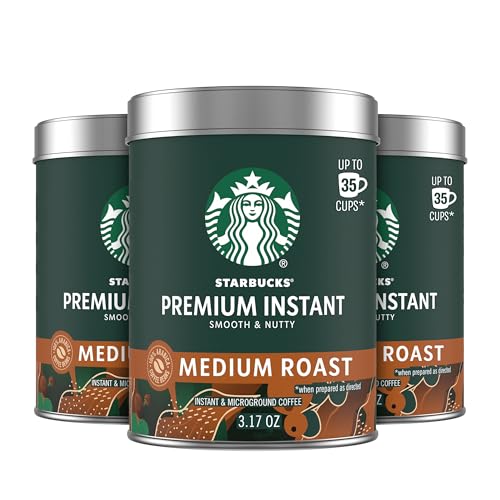
Starbucks Medium Roast Instant Coffee, 3 Tins
|
9.2/10 | Buy |
| Best Budget |
 Folgers Classic Roast Instant Coffee Crystals |
8.6/10 | Buy |
 Death Wish Coffee Instant Dark Roast Packets |
8.6/10 | Buy |
Starbucks Medium Roast Instant Coffee, 3 Tins
Delivering up to 105 cups across three tins, this Arabica blend dissolves quickly in hot or cold water without requiring brewing equipment. It is a convenient choice for busy mornings or travel when you want a balanced cup featuring subtle chocolate and nut notes.
Pros
- Quickly dissolves in hot or cold water
- Customizable brew strength without preset portions
- Generous yield of up to 105 total cups
- Smooth, balanced flavor with nutty undertones
Cons
- Lacks the portability of pre-portioned single-serve packets
- Tins must be kept tightly sealed to preserve freshness
Folgers Classic Roast Instant Coffee Crystals
Folgers Classic Roast Instant Coffee delivers a smooth, familiar medium roast profile in convenient crystal form that dissolves easily in hot or cold liquids. It provides a dependable, hassle-free morning cup for anyone seeking classic American coffee flavor without the need for grinders or brewing equipment.
Pros
- Dissolves rapidly in hot or cold water and milk with no brewer or paper filters required
- Eliminates grinding completely, protecting burr sets and hoppers from oil accumulation
- Smooth, consistent flavor profile that pairs effortlessly with everyday dairy and creamers
- Features a collectible limited-edition label celebrating America's 250th anniversary
Cons
- Lacks the complex terroir, delicate aromatics, and crema found in freshly ground whole beans
- Instant crystal texture can cake or clump if moisture or steam enters the jar during storage
- Commercial packaging does not disclose specific botanical species ratios or country origins
Death Wish Coffee Instant Dark Roast Packets
This USDA Organic dark roast blend pairs bold Arabica and high-caffeine Robusta beans in convenient single-serve instant packets that dissolve rapidly in hot water. It provides an intense, full-bodied cup with zero grinder maintenance, making it an ideal choice for travelers, campers, and busy mornings on the go.
Pros
- Single-serve instant format requires no grinder, filters, or brewing equipment
- USDA Organic certification ensures verified agricultural sourcing standards
- Dark roast Arabica and Robusta blend yields a bold, robust cup that cuts through milk and creamers
- Individually sealed packets preserve freshness and offer reliable travel portability
Cons
- Lacks the nuanced extraction control and fresh aromatics of freshly ground whole beans
- Small 8-count package yields fewer servings compared to standard multi-pound bulk bags
- Intense Robusta and dark roast combination may taste overly potent for drinkers who favor mild, light roasts
The Core Differences Between Single-Serve Coffee Pods and Instant Coffee
Single-serve coffee pods are not instant coffee, despite persistent myths that equate rapid pod brewing with dehydrated granules. Standard single-serve cartridges contain authentic roasted coffee beans ground to a specific particle size and packed into an internal filter basket. Instant coffee, by contrast, is completely soluble coffee extract created by brewing large industrial volumes of coffee and removing all moisture through evaporation or freezing. When hot water enters a single-serve machine, it performs genuine hydraulic extraction across solid grounds, leaving behind spent dregs just like a drip coffeemaker or espresso machine.
Anatomy of a Coffee Pod: What Actually Sits Inside the Capsule
Peeling open a standard K-Cup or aluminum capsule reveals a self-contained miniature brewing chamber designed for single-use extraction. The outer shell is typically molded from food-safe, BPA-free polypropylene plastic or lightweight aluminum to create an oxygen-tight barrier. Suspended inside this shell is a fluted paper or non-woven polymer filter basket that holds between nine and twelve grams of ground coffee for standard single-serve cups. An airtight foil lid seals the top of the capsule, locking out ambient moisture and atmospheric oxygen to keep the volatile aromatic compounds fresh until brew time.
Manufacturers displace residual oxygen inside the capsule with a controlled blast of food-grade nitrogen before heat-sealing the foil lid. This nitrogen-flushing process prevents the natural fats and delicate flavor notes in the roasted grounds from oxidizing on pantry shelves. When the brewing cycle finishes, opening the brewer chamber reveals that the capsule remains full of wet, heavy coffee grounds trapped inside its paper basket. If pods were truly instant coffee, that internal filter would be entirely empty because hot water would dissolve the contents without leaving any solid residue behind.
How Instant Coffee Is Made: The Dehydration and Soluble Crystal Process
Producing instant coffee requires an extensive industrial manufacturing process that begins with brewing massive batches of liquid coffee liquor. Commercial processors brew roasted coffee beans in enormous commercial percolator columns using pressurized hot water to pull out all soluble solids. Once the liquid reaches maximum concentration, processors clarify the extract by stripping away all insoluble fiber and sediment. The resulting liquid concentrate then moves into specialized drying equipment where all water content is completely eliminated, yielding dry soluble granules.
Two primary dehydration methods dominate commercial production: high-heat spray-drying and cryogenic freeze-drying. Spray-drying atomizes the liquid concentrate into a towering chamber filled with hot air, causing the droplets to flash-dry into fine powder as they fall, a method seen in traditional staples like Folgers Classic Roast Instant Coffee. Modern freeze-drying takes a gentler approach by freezing concentrated coffee slush, breaking it into granules, and sublimating the ice under a deep vacuum to protect delicate aromatics. Premium products such as Starbucks Premium Instant Coffee Medium Roast often incorporate finely ground roasted Arabica microgrounds into freeze-dried crystals to enhance authentic café flavor.
Extraction Physics: Pressurized Water Flow Versus Direct Dissolution
Brewing a single-serve capsule involves rapid dynamic extraction driven by thermal energy, flow rate, and hydraulic pressure. When you lower the machine handle, sharp steel needles puncture the top foil lid while an exit needle pierces the bottom of the plastic shell. The brewer pump forces heated water, typically calibrated between 192°F and 204°F, into the capsule chamber at pressures ranging from 20 to 40 PSI in Keurig units, or up to 19 bars in Nespresso Original systems. This pressurized hot water washes through the compacted grounds, dissolving soluble sugars and oils while the internal paper filter restrains insoluble bean fibers.
Instant coffee bypasses the extraction stage entirely because chemical extraction already took place at the roasting facility weeks or months earlier. Preparing instant coffee is a purely physical dissolution process that requires no mechanical pressure, heating elements, or filtration barriers. You simply measure the dehydrated crystals into a mug, pour hot or cold liquid over them, and stir for several seconds until the solids vanish into solution. Because dissolution happens instantly upon liquid contact, there is no risk of under-extracting sour acids or over-extracting bitter wood cellulose during cup preparation.
Flavor Profiles, Crema, and Total Dissolved Solids
Freshly brewed single-serve pods deliver distinct aromatic complexity because roasted grounds retain their volatile aromatic compounds inside hermetic capsule seals. As pressurized hot water flows through the bed of grounds, it emulsifies coffee oils and suspends microscopic bean particles, creating a layered beverage with noticeable body. In high-pressure capsule systems, this hydraulic force creates a dense layer of golden foam known as crema, formed by pressurized carbon dioxide escaping through emulsified coffee oils. These delicate sensory elements are difficult to duplicate in standard soluble crystals because industrial dehydration dissipates fragile aromatic aldehydes.
Even so, the instant coffee market has evolved considerably beyond flat, bitter powders of past generations. High-intensity options like Death Wish Coffee Instant Dark Roast Coffee combine premium Arabica and bold Robusta beans to produce intense, robust cups that dissolve within seconds. Instant coffee allows drinkers to adjust beverage strength effortlessly by adding an extra half-teaspoon of crystals without running an additional brew cycle. While single-serve pods offer a classic brewed mouthfeel, modern soluble packets provide unmatched consistency and eliminate the watery extraction caused by oversized pod brew selections.
Caffeine Delivery and Bean Selection Across Formats
Caffeine potency between pods and instant powders depends heavily on the specific bean species and the dry weight used per serving. Standard eight-ounce single-serve pods generally deliver between 75 and 140 milligrams of caffeine, depending on whether the blend relies on sweet Arabica beans or potent Robusta beans. For a closer look at natural caffeine variances across roasts and origins, exploring the baseline caffeine in Arabica coffee pods highlights how roasters balance stimulant strength with balanced acidity. Instant coffee typically provides between 60 and 90 milligrams of caffeine per level teaspoon, though high-caffeine instant formulations can easily double that output.
Robusta beans contain roughly double the chemical caffeine concentration of Arabica beans, alongside deeper chlorogenic acids that produce heavier crema and pronounced bitterness. Roasters crafting single-serve espresso capsules frequently blend a minority percentage of Robusta with Arabica to enhance crema volume and boost morning alertness. Instant coffee manufacturers also lean heavily on Robusta beans because their rugged chemical structure withstands aggressive industrial extraction and dehydration without losing potency. Whether you prefer a single-serve capsule or an instant packet, checking the packaging for 100 percent Arabica or blended bean varieties helps predict the caffeine punch.
The Exceptions: Do Any Pods Contain Instant Powder?
While standard black coffee pods contain genuine ground coffee, certain specialty single-serve pods actually do contain soluble instant ingredients. Flavored dessert cartridges, single-step lattes, hot cocoas, and instant cider pods rely entirely on dehydrated soluble powders instead of roasted grounds. If you slice open a caramel cappuccino pod, you will find sweetened dairy powders, artificial flavor carriers, and soluble instant coffee granules packed loose in the cup. These specialty pods lack internal paper filters because the entire contents must dissolve rapidly in hot water and pass completely through the bottom exit needle.
Telling the difference between a real ground coffee capsule and a soluble beverage pod is straightforward before brewing. Shaking a pure coffee pod produces a muffled, sandy rustling sound as dry grounds shift against the internal paper filter. Shaking a soluble latte or hot cocoa pod produces a loose, powdery rattle, and the capsule feels noticeably lighter in your hand. Also, spent specialty pods feel completely hollow and empty after brewing because the incoming stream of water dissolved and flushed every grain of powder directly into your mug.
Environmental Impact, Recycling, and Disposal Realities
Managing single-serve waste requires careful attention to packaging composition and municipal sorting infrastructure. Standard disposable pods use composite construction featuring an aluminum lid, a polypropylene #5 plastic cup, a paper filter, and wet organic grounds. Recycling these units requires letting the spent pod cool, peeling away the foil top, dumping the wet grounds into a compost bin, and rinsing the plastic shell. Even when properly separated, many local materials recovery facilities cannot capture small plastic items, meaning unseparated pods inevitably head directly to landfills.
Commercial compostable pods certified by the Biodegradable Products Institute offer an alternative, but they require industrial municipal facilities that maintain sustained heat above 140°F to break down. Soluble instant coffee presents a much simpler waste footprint by eliminating single-use plastic cartridges entirely. A single glass jar or tin of instant coffee yields dozens of servings with minimal packaging that municipal recycling programs handle effortlessly. For single-serve owners determined to minimize trash, reusable stainless steel filter pods offer a sustainable middle ground that uses fresh grounds without discarding plastic shells.
Machine Maintenance: Preventing Needle Clogs and Mineral Scale
Operating a single-serve machine requires routine hardware care because real ground coffee leaves behind oils and fine sediment during extraction. Over hundreds of brew cycles, microscopic coffee fines and sticky oils migrate into the lower exit needle, restricting water passage and causing chamber backpressure. If the exit needle becomes fully obstructed, pressurized brew water pushes backward through the entrance puncture, creating messy foil blowouts and dumping wet grounds into your mug. Clearing these clogs safely requires unplugging the machine, letting trapped steam cool, and using an unfolded paperclip to gently dislodge compacted grounds from the exit tube.
Hard tap water introduces another ongoing maintenance challenge by coating internal thermoblock heating elements with chalky calcium carbonate scale. Mineral buildup restricts water flow, causes loud groaning during pumping cycles, and lowers brewing temperatures below the ideal 195°F extraction threshold. Running a descaling solution or food-grade citric acid wash through the water reservoir every three to six months restores proper water pressure and heat. Instant coffee avoids these appliance complications entirely, as preparing a soluble cup requires nothing more than a simple electric kettle, stovetop pot, or mug of microwaved water.
Cost Economics and Fresh-Brewing Alternatives
Evaluating long-term beverage costs highlights sharp economic differences between single-serve pods and instant coffee options. Single-serve pods carry a substantial convenience markup because you pay for precision grinding, individual dose packaging, and hermetic nitrogen-sealed shells. Buying large multi-serving tins or glass jars of instant coffee drastically reduces the ongoing cost per cup for daily morning drinkers. For those who enjoy the flavor depth of genuine coffee extraction, pairing a standard drip filter machine extraction setup with freshly ground beans offers exceptional balance between fresh taste and household budget efficiency.
Another popular option for cost-conscious coffee drinkers is utilizing refillable mesh or stainless steel capsules in their single-serve brewers. Refillable pods let you buy whole bean or pre-ground bags of your favorite specialty roaster, scooping nine to twelve grams directly into the reusable basket. This strategy cuts down per-cup costs significantly, eliminates single-use plastic waste, and guarantees that your cup is brewed from fresh grounds rather than soluble powders. When using refillable pods, select a medium grind size to prevent fine silt from choking the micro-mesh screen and causing water overflow.
Practical Guidance for Choosing Your Morning Brew
Deciding between single-serve coffee pods and instant coffee comes down to your personal priorities regarding flavor depth, speed, and preparation flexibility. Single-serve capsules excel when you demand authentic drip or espresso-style extraction in under a minute without measuring scoops or washing carafes. They provide the aromatic nuances, subtle roast characteristics, and satisfying mouthfeel that only fresh hot water running through real roasted grounds can produce. As long as you select an appropriate brew volume, such as six or eight ounces, single-serve pods provide dependable morning satisfaction.
Instant coffee remains an unbeatable choice for outdoor camping, office cubicles without water hookups, fast iced coffee preparation, and culinary baking recipes. High-grade freeze-dried options offer remarkably smooth flavor, dissolve instantly in cold milk or water, and require zero expensive brewing appliances. Now that you understand the clear mechanical line separating pressurized capsule extraction from soluble powder dissolution, you can brew every morning cup with complete confidence. Whether you press a single-serve button or stir up a quick spoonful of crystals, your coffee choice matches your exact daily routine.
About the author
Peter Giuliano is a longtime specialty coffee professional, educator, researcher, and writer whose career spans barista work, roasting, cupping, coffee buying, training, and coffee science. With more than three decades of industry experience, he brings a research-driven perspective to brewing, extraction, sensory evaluation, and the factors that influence coffee quality.