
Best Entry Level Espresso Machines of 2026 Top Picks
Best Entry Level Espresso Machines simplify your morning cup in October 2026 with fast thermoblock heating, balanced extraction, and smooth microfoam.
 By Jason Sarley
Updated October 3, 2026
By Jason Sarley
Updated October 3, 2026

Thin crema, watery coffee, and frustrating morning delays usually happen when basic setups fail to stabilize brew temperature or pump pressure. Inconsistent extraction turns quality roasted beans into sour or unpleasantly bitter shots. Selecting the best entry level espresso machines solves this with digital thermal stability, balanced pressure delivery, and forgiving portafilter baskets. You can enjoy balanced shots and rich crema right at home instead of spending money at commercial coffee bars. You can even check out reliable budget De’Longhi espresso machines to see how compact boilers deliver balanced extraction on standard 120V household outlets.
Modern brewing equipment has made crafting espresso far more accessible. Fast thermoblock heating systems and PID temperature regulation reach brewing temperature in under a minute, cutting morning wait times. Meanwhile, included pressurized filter baskets help beginners pull smooth shots without needing immediate mastery of grind distribution. Powerful steam wands turn milk into glossy microfoam for creamy lattes and cappuccinos. After comparing pump ratings, boiler wattage, and daily maintenance routines across top manufacturers, establishing a rewarding coffee corner at home is straightforward and affordable in 2026.
| Award | Product | GCG Score About GCG ScoreThe GCG Score is our own rating from 0 to 10, based on performance, design and build, ease of use, and value. It reflects independent research and is never influenced by manufacturers, retailers, or affiliate commissions. Learn more › | |
|---|---|---|---|
| Best Overall |
Breville BES870XL Barista Express Espresso
|
9.2/10 | Buy |
| Best Budget |
 CASABREWS 3700 Essential Stainless Steel Espresso
|
9.1/10 | Buy |
| Best Value |
 atatix Espresso Machine with Milk Frother
|
9.1/10 | Buy |
| Best Premium |
 CASABREWS CM5418 Compact Espresso Machine
|
8.9/10 | Buy |
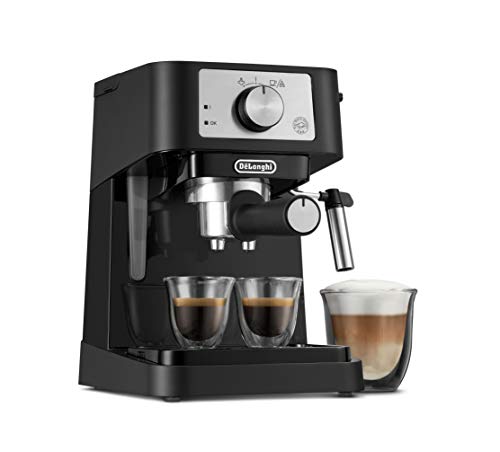 De'Longhi Stilosa Compact Manual Espresso Machine
|
8.6/10 | Buy | |
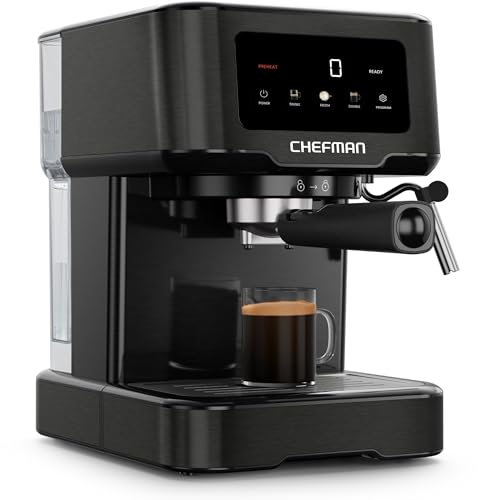 Chefman CraftBrew Espresso Machine
|
8.4/10 | Buy | |
 Breville BES870BTR Barista Express Espresso
|
8.3/10 | Buy | |
 Arecovas Espresso Machine, 20 Bar Pressure
|
8.0/10 | Buy | |
 AERCANA Espresso Machine 20 Bar
|
8.0/10 | Buy | |
 Gevi 20 Bar Compact Espresso Machine
|
8.0/10 | Buy |
Frequently Asked Questions
Does a 20-bar pump make better espresso than commercial 9-bar systems?
No, higher advertised pump ratings like 15-bar or 20-bar do not mean you get superior coffee. Standard commercial espresso relies on 9-bar extraction pressure to avoid channeling through the coffee puck. High-pressure vibration pumps in the best entry level espresso machines build sufficient headroom to push water through fine grinds and pressurized baskets, but an internal overpressure valve regulates the actual brew pressure for balanced flavor.
What is the difference between pressurized and non-pressurized portafilter baskets?
Pressurized filter baskets feature a double-wall design with a single exit hole to mechanically create artificial crema. This setup helps beginners brew rich coffee using pre-ground store beans or lighter roasts like mellow decaf coffee without requiring an expensive espresso grinder. Non-pressurized single-wall baskets require exact grind calibration and uniform tamping, but they reward careful technique with genuine micro-crema and nuanced flavors.
Can entry level espresso machines brew espresso and steam milk simultaneously?
No, single boiler and single thermoblock machines cannot brew shots and steam milk at the same moment. These compact units must shift temperature between brewing at roughly 200 degrees Fahrenheit and steaming milk at around 265 degrees Fahrenheit. After frothing velvety microfoam with the steam wand, you must allow the heating block to cool down or run a quick water flush before pulling your next shot to avoid burning the grounds.
Do built-in conical burr grinders perform well on entry level espresso machines?
Yes, integrated conical burr grinders deliver excellent consistency and convenience for home setups. Models like the Breville Barista Express feature built-in burrs with intuitive grind size dials that deposit fresh grinds directly into the 54mm portafilter. Freshly grinding right before brewing prevents oxidation, maximizes crema, and saves valuable counter space by eliminating the need for a separate grinding appliance.
How much kitchen counter and cabinet clearance do compact espresso makers require?
Most compact home espresso units need between 11 and 13 inches of vertical clearance, fitting comfortably under standard 18-inch upper kitchen cabinets. However, top-loading bean hoppers and rear removable water reservoirs often require an extra 4 to 6 inches of headroom to refill easily. Choosing a machine with a front-accessible drip tray and a slide-out water reservoir helps keep daily cleanup simple in tight apartment kitchens.
How often should you run a descaling cycle on a home espresso maker?
Run a thorough descaling cycle every two to three months, or roughly every 200 brewing cycles, depending on local water hardness. Mineral scale buildup restricts narrow thermoblock water lines, lowers brewing temperatures, and degrades steam wand pressure over time. Using filtered water and cycling manufacturer-approved descaling solution protects heating elements and ensures consistent pump flow for years to come.
About the author
Jason Sarley is a coffee professional, writer, roaster, and licensed Q Grader with extensive experience in cupping and coffee evaluation. He also holds professional roasting credentials and has worked closely with innovative brewing technology, giving him practical insight into how brewing equipment, extraction methods, and coffee quality come together in the cup.