
Best Espresso Machine Review of 2026 for Rich Crema
Rich crema and balanced espresso start with this Best Espresso Machine Review guide for October 2026, covering top milk steaming wands and PID units.
 By Kim Westerman
Updated October 3, 2026
By Kim Westerman
Updated October 3, 2026

Weak crema and watery morning shots often trace back to uneven pump pressure or unstable water temperatures. Getting a balanced, syrupy extraction at home requires a capable setup with reliable thermoblocks or stainless steel boilers, consistent Italian pumps, and solid temperature control. Our updated Best Espresso Machine Review looks closely at manufacturer specifications, portafilter diameters from 51mm to 54mm, and real user feedback to help you identify which setup actually delivers balanced espresso. A great machine must also pair well with fresh grounds, much like equipment highlighted in retentionless coffee grinder reviews to keep morning channeling to a minimum.
Countertop space is another big hurdle in busy kitchens, especially when navigating low upper cabinets and tight outlet locations. Many home baristas want hands-free milk steaming for creamy lattes, while others crave manual steam wands to practice latte art without waiting several minutes for the steam circuit to heat up. You don’t have to settle for lukewarm drinks or confusing controls. We evaluate key design factors like rapid thermojet warmups, built-in conical burr grinders, and removable water reservoirs so you can skip the guesswork.
| Award | Product | GCG Score About GCG ScoreThe GCG Score is our own rating from 0 to 10, based on performance, design and build, ease of use, and value. It reflects independent research and is never influenced by manufacturers, retailers, or affiliate commissions. Learn more › | |
|---|---|---|---|
| Best Overall |
Breville BES870XL Barista Express Espresso
|
9.2/10 | Buy |
| Best Premium |
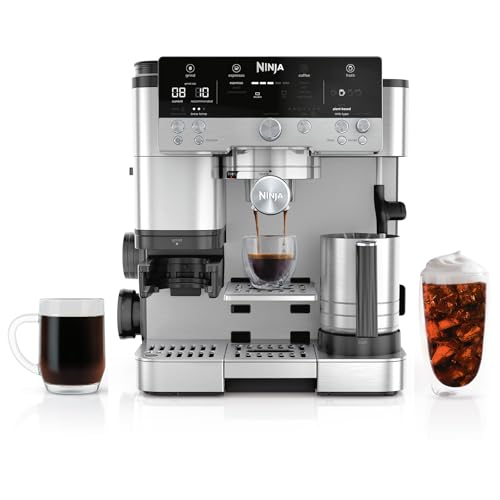 Ninja Luxe Café Premier 3-in-1 Espresso Machine
|
9.2/10 | Buy |
| Best Budget |
 CASABREWS 3700 Essential Stainless Steel Espresso
|
9.1/10 | Buy |
 CASABREWS CM5418 Compact Espresso Machine
|
8.9/10 | Buy | |
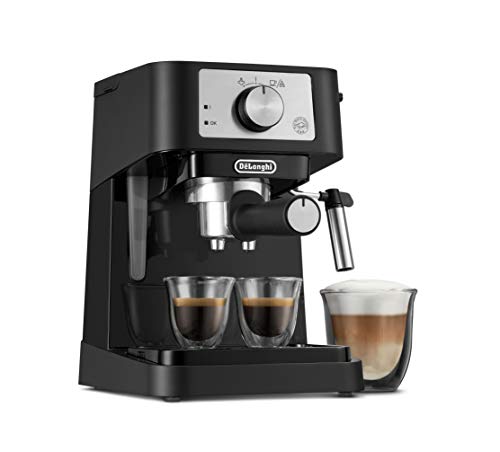 De'Longhi Stilosa Compact Manual Espresso Machine
|
8.6/10 | Buy | |
| Best Value |
 De'Longhi Classic Espresso Machine, Milk Frother
|
8.6/10 | Buy |
 Breville BES870BTR Barista Express Espresso
|
8.3/10 | Buy | |
 Arecovas Espresso Machine, 20 Bar Pressure
|
8.0/10 | Buy | |
 Espresso Machine with Grinder and Frother
|
8.0/10 | Buy | |
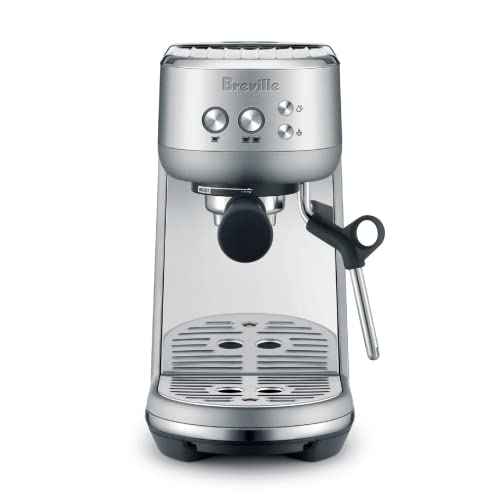 Breville BES450BSS Bambino Espresso Machine
|
8.0/10 | Buy |
Frequently Asked Questions About Best Espresso Machine Review
What is the main difference between a thermoblock and a traditional boiler?
Thermoblock systems heat water on demand through narrow metal channels, while traditional boilers keep a reservoir of water heated. Thermoblocks heat up rapidly and save kitchen space, making them ideal for rushed mornings. Boilers provide great thermal mass for multiple shots but require longer warm-up times.
Does 20-bar pump pressure pull better espresso than 9-bar or 15-bar?
No, higher pump pressure does not automatically produce better espresso flavor. True commercial extraction targets roughly 9 bars of pressure at the group head to avoid channeling. Machines with 15 or 20-bar pumps often rely on pressurized baskets to help pre-ground coffee produce crema.
Should you choose an espresso machine with a built-in grinder or buy a separate unit?
Built-in grinders save precious kitchen counter space, while standalone units offer broader versatility. All-in-one machines provide rapid bean-to-portafilter dosing for streamlined morning routines. If you switch between espresso and drip brewing, pairing your machine with compact electric burr grinders offers more flexibility.
What is the difference between pressurized and non-pressurized portafilter baskets?
Pressurized dual-wall baskets regulate pressure through a tiny secondary hole, whereas single-wall baskets depend entirely on proper grind size and tamping. Pressurized baskets forgive coarse pre-ground coffee. Single-wall baskets require a dedicated grinder but reward you with nuanced sweetness and authentic crema.
Why is PID digital temperature control valuable in home espresso makers?
A PID controller actively stabilizes water temperature to prevent sour under-extracted shots or bitter burnt coffee. Mechanical thermostats cause temperature swings that lead to unpredictable flavor. Digital PID algorithms ensure your brew temperature remains steady from the first drop to the finish.
How often should you descale an espresso machine in 2026?
Most machines need descaling every two to three months based on daily use and local water hardness. Mineral scale clogs internal heating passages and restricts steam wand pressure over time. Running regular descaling cycles protects heating elements and keeps your morning shots tasting clean.
About the author
Kim Westerman is an experienced coffee reviewer, licensed Q Grader, and longtime food and beverage writer with extensive sensory evaluation expertise. Her background in structured tasting helps her assess coffee quality, flavor characteristics, and brewing results with a thoughtful, consumer-focused approach that makes technical details easier for everyday coffee drinkers to understand.