
Coffee Makers for Solar Power Systems of 2026 for Low-Wattage Brewing
Coffee Makers For Solar Power Systems provide hot morning brews without overloading off-grid battery banks. Explore top low-wattage picks updated for October 2026.
 By Jason Sarley
Updated October 3, 2026
By Jason Sarley
Updated October 3, 2026
Reliable Morning Brews Without Overloading Off-Grid Batteries
Tripping an inverter before your first morning sip quickly ruins a peaceful off-grid morning. High-draw heating elements in standard kitchen brewers can drain deep-cycle batteries or trigger overload faults in seconds. Operating efficient coffee makers for solar power systems requires balancing wattage draw with proper water temperature saturation. When heating coils pull manageable wattage, your power station stays stable while the brew basket still reaches the proper heat needed for balanced extraction. Selecting a low-draw brewer or an internal battery-powered unit prevents voltage drops and keeps your daily routine intact.
Careful analysis of manufacturer wattage ratings and heating mechanics reveals that you do not have to settle for weak, lukewarm cups just to protect your power reserve. Many compact setups paired with a dependable small batch coffee maker deliver rich flavor without demanding peak wattage spikes. Whether you brew with ground coffee through a reusable filter basket or snap in quick pods, keeping power consumption low guarantees hot morning mugs wherever you set up camp. Evaluating reservoir volume and auto shut-off features also helps prevent needless electrical draw after the brew cycle finishes.
| Award | Product | GCG Score About GCG ScoreThe GCG Score is our own rating from 0 to 10, based on performance, design and build, ease of use, and value. It reflects independent research and is never influenced by manufacturers, retailers, or affiliate commissions. Learn more › | |
|---|---|---|---|
| Best Overall |
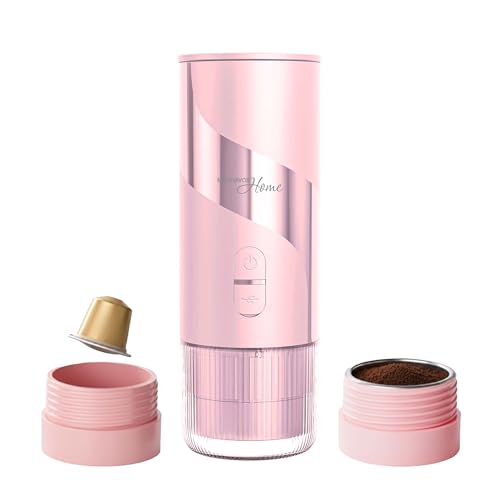
Magnavox HOME Portable Espresso Coffee Maker
|
9.1/10 | Buy |
 BLACK+DECKER Single-Serve Coffee Maker with 50oz
|
8.1/10 | Buy | |
| Best Budget |
 Elite Gourmet EHC111A Personal Single-Serve
|
7.8/10 | Buy |
Frequently Asked Questions
What inverter wattage is required to run compact coffee makers for solar power systems?
Most low-wattage drip brewers require a pure sine wave inverter rated for at least 700 to 1000 watts. Standard household drip coffee makers often demand 1000 to 1500 watts, which can instantly overload portable power stations. Compact units rated between 600 and 650 watts run comfortably on modest solar generators without tripping surge limits. Battery-powered espresso devices operate on internal rechargeable cells, completely eliminating AC inverter demand during extraction.
Can you run single-serve coffee makers for solar power systems directly from a 12V DC auxiliary port?
No, standard plug-in brewers require 120V alternating current through an inverter unless they feature internal rechargeable batteries. Models like personal pod brewers rely on standard 120V household wall plugs that need inverter conversion. Portable options equipped with integrated lithium-ion batteries can charge via USB or low-voltage DC cables, making them exceptionally gentle on solar storage banks. Using dedicated low-power appliances alongside small batch drip coffee makers with slow brew cycles keeps electrical stress minimal.
Does a lower heating element wattage cause sour or under-extracted coffee?
Lower wattage increases brewing duration slightly but does not ruin extraction if the water contact time remains balanced. Heating elements around 600 watts take a minute or two longer to bring fresh water up to extraction heat. Because the water moves steadily over coffee grounds in smaller volumes, the contact time extracts balanced flavor notes without tasting thin or sour. Keeping your brew size around 8 to 12 ounces prevents the water temperature from dropping midway through the cycle.
How do warming plates affect power consumption on solar setups?
Nonstick keep-hot warming plates create a continuous electrical draw that steadily depletes solar battery banks. While a nonstick plate keeps glass carafes warm for up to an hour, that ongoing resistance heating wastes precious stored amp-hours. Brewing directly into an insulated stainless steel travel mug or shutting the unit off immediately after brewing saves substantial battery capacity. Thermal insulation keeps coffee hot naturally without burning beans or using electricity.
How often should coffee makers for solar power systems be descaled when using off-grid water sources?
Descaling every four to six weeks is recommended when relying on mineral-rich well water or portable filtration systems. Hard water minerals accumulate quickly on small heating coils, forcing the heating element to work harder and consume more power. Running a mild citric acid or vinegar rinse clears scale buildup from internal tubing and restores rapid flow. Clean heating tubes maintain fast brew speeds and protect your electrical system from prolonged draw times.
About the author
Jason Sarley is a coffee professional, writer, roaster, and licensed Q Grader with extensive experience in cupping and coffee evaluation. He also holds professional roasting credentials and has worked closely with innovative brewing technology, giving him practical insight into how brewing equipment, extraction methods, and coffee quality come together in the cup.