
How Do Refillable Coffee Pods Work: A Practical Brewing and Mechanics Guide for 2026
Learn how do refillable coffee pods work to brew custom grounds, cut plastic waste, and maintain single-serve machines in November 2026.
 By Chris Kornman
Updated October 21, 2026

Single-serve coffee makers deliver fast morning convenience, yet pre-packaged disposable capsules often limit your roast selection and generate recurring plastic waste. Understanding how do refillable coffee pods work allows you to bypass expensive disposable cups and brew your preferred freshly roasted beans at home. Refillable capsules function as mini drip baskets engineered with stainless steel mesh or perforated walls that fit directly inside standard single-serve brew chambers. By mimicking the physical dimensions of commercial capsules, these reusable filters guide pressurized hot water through loose grounds without puncturing the pod shell.
Transitioning away from single-use pods also lets you control extraction strength, bean origin, and dry dose weight in ways that rival standard drip filter brewing techniques. Many households discover that making the switch drastically lowers daily beverage costs while keeping thousands of discarded plastic capsules out of landfills. Achieving a rich, balanced cup requires knowing the mechanical nuances of water flow, chamber puncture clearance, and grind calibration. Examining the operational mechanics of reusable capsules ensures you avoid common brewing headaches like weak extraction, chamber overflows, and stray coffee sediment.
| Award | Product | GCG Score About GCG ScoreThe GCG Score is our own rating from 0 to 10, based on performance, design and build, ease of use, and value. It reflects independent research and is never influenced by manufacturers, retailers, or affiliate commissions. Learn more › | |
|---|---|---|---|
| Best Overall |
Perfect Pod Café Save Reusable Cups (6-Pack)
|
8.9/10 | Buy |
| Best Premium |
 GoodCups Reusable K-Cup Filters (7-Pack) |
8.8/10 | Buy |
 Perfect Pod Café Save Reusable K-Cup Coffee |
8.8/10 | Buy | |
| Best Budget |
 Perfect Pod Café Save Reusable Cups (4-Pack) |
8.3/10 | Buy |
| Best Value |
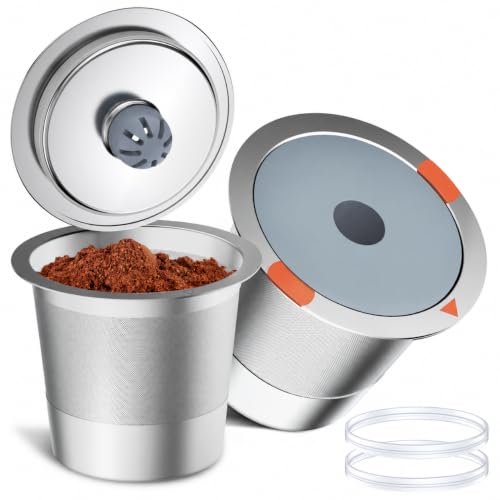 Noalto Stainless Steel Reusable K-Cups (2-Pack) |
8.3/10 | Buy |
Perfect Pod Café Save Reusable Cups (6-Pack)
A practical alternative to disposable single-use pods, this pack allows Keurig owners to brew their favorite ground coffee without extra adapters. The snap-lid design fits a broad range of legacy and modern single-stream brewers, cutting down plastic waste effectively.
Pros
- Broad compatibility with Keurig 1.0 and 2.0 brewers
- Eco-friendly alternative to disposable plastic pods
- Requires no additional machine adapters
- Six-pack setup supports batch prep
Cons
- Requires manual cleaning and emptying after each brew
- Compatible only with single-stream versions of K-Slim
- Best suited for medium grinds rather than fine espresso
GoodCups Reusable K-Cup Filters (7-Pack)
Built with stainless steel micro-mesh and unibody lids, this color-coded 7-pack lets users brew ground coffee in various Keurig brewers without single-use waste. It suits busy households looking to prepare different coffee blends consecutively without washing pods between cups.
Pros
- Color-coded cups simplify serving multiple coffee varieties
- Durable unibody lid construction resists breakage
- Stainless steel micro-mesh provides balanced extraction
- BPA-free design significantly cuts down disposable pod waste
Cons
- Incompatible with Keurig multistream and K-Supreme models
- Does not work with K-Mini Plus or K-Duo Plus
Perfect Pod Café Save Reusable K-Cup Coffee
The Perfect Pod Café Save 4-Pack with EZ-Scoop lets budget-conscious and eco-friendly coffee drinkers brew their favorite fresh grounds in single-needle single-serve machines. It eliminates disposable pod waste while slashing recurring per-cup coffee costs.
Pros
- Substantially lowers the recurring cost per cup compared to buying pre-filled disposable pods
- Gives you total freedom over bean freshness, roast selection, and custom grind coarseness
- Includes the EZ-Scoop funnel tool for fast, mess-free pod loading
- Durable BPA-free construction helps keep single-use plastic out of landfills
Cons
- Not compatible with 5-needle Keurig MultiStream systems or optical-sensor Keurig 2.0 machines
- Requires manual emptying and rinsing after every brew cycle unlike instant disposable capsules
- Grinding beans too finely can lead to slower flow or fine sediment passing into the cup
Perfect Pod Café Save Reusable Cups (4-Pack)
Designed for Keurig brewers, these refillable capsules let coffee drinkers brew their own fresh grounds while eliminating single-use plastic waste. The snap-lid design works right out of the box without requiring extra adapters or complicated setup.
Pros
- Broad compatibility across Keurig 1.0 and 2.0 models
- 100 percent BPA-free and reusable construction
- Simple snap lid requires no separate adapter
- Allows using custom fresh coffee grounds
Cons
- Requires manual emptying and washing after each brew
- Supports single-stream brewers rather than multi-stream models
Noalto Stainless Steel Reusable K-Cups (2-Pack)
Built from durable stainless steel, this two-pack of refillable pods provides Keurig owners with an eco-conscious alternative to disposable capsules. The 360-degree perforation promotes thorough extraction while keeping natural coffee oils intact.
Pros
- Sturdy stainless steel construction avoids plastic contact
- Side and bottom perforations enhance extraction
- Dishwasher safe for low-effort cleaning
- Tightly sealing lid minimizes leaks and overflows
Cons
- Incompatible with multi-stream machines like the K-Supreme
- Will not fit K-Slim, K-Iced, or K-Duo Plus brewers
The Mechanics and Operation of Refillable Coffee Pods
Refillable coffee pods replace single-use pre-packaged capsules with a durable, multi-use chamber designed to fit directly into your brewer. Instead of relying on punctured foil and plastic barriers, these units utilize reusable filtration surfaces that permit pressurized water to pass through your personal coffee grounds. The entire process hinges on replicating the external geometry of standard commercial capsules while safeguarding the brewer internal needle assembly. Understanding the physical layout and hydraulic flow of these accessories helps you achieve better extraction consistency every morning.
The Core Anatomy and Fluid Dynamics of a Refillable Pod
A refillable coffee pod consists of three primary components: the outer structural housing, the permeable filtration medium, and a secure sealing lid. The outer shell is precision molded from either food-grade polypropylene plastic or machined stainless steel to mirror standard capsule proportions. Built into the sidewalls or base is a fine stainless steel micro-mesh screen that acts as the primary barrier against loose grounds. When locked into place, the pod forms a self-contained extraction basket capable of withstanding the elevated temperatures of single-serve brewing cycles.
Fluid dynamics inside a single-serve brew head differ noticeably from standard manual pour-over drippers. Single-serve machines utilize internal vibrating pumps that push heated water into the capsule at pressures typically ranging between 20 and 40 PSI. In a disposable pod, this hydraulic pressure builds until the bottom foil ruptures against a puncture pin. In contrast, a refillable capsule allows water to permeate the coffee bed continuously, filtering liquid through the perimeter mesh as soon as saturation occurs.
How Water Enters and Exits the Capsule During Brewing
The brewing sequence initiates when you close the machine lid, lowering the brewer upper entrance needle into alignment with the pod. Standard commercial capsules are pierced directly through their foil lids by this sharp metal tube. Refillable pods avoid structural damage by integrating a pre-molded top opening or a flexible silicone intake port directly on the lid. Hot water discharges through this aperture, saturating the dry coffee bed evenly across the upper surface without crushing the reusable lid.
Once hot water enters the pod chamber, it flows downward through the grounds before migrating outward toward the perimeter filters. The stainless steel micro-mesh screens, such as those found on GoodCups and Perfect Pod Café Save filters, separate the dissolved solids from the spent grounds. Comparing this rapid extraction path against standard coffee filter sizes and flow rates demonstrates how compact single-serve baskets depend on precise mesh porosity to prevent water from backing up. The filtered coffee then collects along the brewer bottom funnel and drains into your mug.
The Critical Role of Needle Clearance and Machine Protection
Preserving the brewer internal puncture pins represents the most crucial engineering challenge in reusable pod design. Disposable K-Cups require a sharp lower exit needle to puncture the plastic base, allowing liquid to escape into the dispensing spout. Refillable pods must accommodate this lower needle without suffering damage or bending the delicate component. Manufacturers solve this issue by shaping the bottom exterior with a deep recessed cavity or specialized needle groove that leaves ample clearance around the pin.
Using an incompatible or generic refillable pod that lacks proper needle clearance can cause severe mechanical damage. When the brewer handle is forced shut against an unyielding flat-bottom pod, the downward leverage can permanently bend or fracture the hardened exit needle. Always inspect the base of a new reusable pod before inserting it into the pod holder. If you feel excessive resistance while pulling down the brew handle, stop immediately to check whether the bottom needle is colliding with the pod frame.
Navigating Brewer Compatibility Across Keurig 1.0, 2.0, and MultiStream
Single-serve brewer ecosystems feature significant differences in brew chamber dimensions, needle configurations, and internal sensor hardware. Keurig 1.0 machines use straightforward physical latching mechanisms with a single central entrance needle and single exit needle. Keurig 2.0 brewers introduced optical sensors designed to scan pod lids for specific reflective markings or colors before authorizing a brew cycle. Reusable pods like the GoodCups 7-Pack and Perfect Pod Café Save feature universal rim profiles engineered to pass 2.0 optical authentication without requiring third-party bypass clips.
Multi-needle brewing systems introduce a separate compatibility hurdle that catches many consumers off guard. Modern MultiStream machines, including the Keurig K-Supreme, K-Slim MultiStream, and K-Duo Plus, utilize five separate puncture needles in the upper brew head to disperse water across five distinct points. Standard single-hole reusable pods, such as the Noalto Universal stainless steel cups and Café Save models, are strictly designed for single-stream brewers. Forcing a single-stream pod into a MultiStream head can crush the peripheral needles or crack the pod lid, so verifying your brewer needle layout is essential.
Calibrating Grind Size and Dosing to Prevent Watery Coffee
Grind size calibration remains the single most important variable determining extraction quality in a refillable pod. Espresso-fine grounds will choke the fine stainless steel micro-mesh, generating intense hydraulic backpressure that forces hot water to spray out of the brew chamber seams. Conversely, extra-coarse grounds provide too little surface resistance, allowing hot water to bypass the particles in under twenty seconds and producing weak, sour coffee. Aim for a consistent medium to medium-coarse grind resembling table salt or coarse sand for optimal extraction contact time.
Coffee dosage within the pod chamber also requires careful measurement rather than aggressive compaction. Most standard reusable capsules hold between 9 and 12 grams of ground coffee when filled to the designated fill line. Unlike commercial espresso portafilters, reusable single-serve pods should never be tamped down with heavy pressure. Compacting the coffee prevents water from penetrating the bed evenly, causing channeling and severe overflows. Simply scoop the grounds loosely into the basket, tap the exterior lightly to settle the bed, and leave slight headspace beneath the rim.
The ground coffee weight you load into a reusable pod directly dictates the beverage strength and caffeine output of your cup. Understanding typical caffeine levels in single-serve coffee pods helps you match your brew volume setting to the physical capacity of the capsule. Brewing an 8-ounce cup with 10 to 12 grams of medium-ground Arabica yields a balanced extraction with standard caffeine delivery. Selecting a 12-ounce brew setting with the same limited coffee dose dilutes the beverage excessively, leaving a thin body and muted flavor notes.
Material Differences: Stainless Steel vs BPA-Free Plastic Mesh
Refillable pods generally fall into two construction categories: molded BPA-free polymer baskets and all-metal stainless steel capsules. Polymer options, such as the Perfect Pod Café Save and GoodCups lines, utilize lightweight polypropylene bodies fitted with stainless steel micro-mesh windows. These pods are economical, highly flexible, and often sold in multi-packs with color-coded lids to help households manage different roasts simultaneously. The food-grade plastics used in these designs are engineered to remain stable under high brewing temperatures without leaching off-flavors.
All-metal designs, exemplified by the Noalto Universal stainless steel k-cup, replace plastic structures entirely with food-grade 304 stainless steel. Stainless steel capsules provide exceptional long-term structural durability and eliminate all plastic contact from the hot-water extraction path. These rigid pods often feature 360-degree precision laser perforations across the sidewalls and bottom plate, maximizing water contact area and preserving natural coffee aromatics. While heavier and slightly warmer to handle immediately after brewing, all-metal pods offer unmatched resistance to wear and dishwasher cycles.
Diagnosing Common Brew Failures, Sediment, and Chamber Leaks
Experiencing fine silt or stray grounds at the bottom of your coffee mug is the most common complaint among new refillable pod users. This issue occurs when pre-ground commercial coffee contains microscopic dust particles, known as fines, that slip through the micro-mesh perforations. Using a burr grinder to produce uniform particle sizes or inserting a secondary disposable paper filter liner inside the pod basket eliminates sediment completely. Additionally, always wipe loose coffee grounds off the pod rim before closing the lid to ensure an airtight seal.
Water leaking from the sides of the brew head or overflowing into the drip tray points directly to excessive hydraulic backpressure. When coffee grounds are packed too tightly or ground too fine, water cannot exit the pod as quickly as the brewer pump injects it. This fluid backup forces hot water out past the upper silicone gasket and around the brew basket edges. If your machine begins groaning or sputtering during brewing, cancel the cycle, allow the pressure to drop, and adjust your grind coarser for subsequent attempts.
Lid latch failures represent another frequent operational hurdle that disrupts morning brewing routines. Reusable pods rely on mechanical snap-fit latches or tight friction ridges to hold the lid firmly closed against internal brew pressure. If coffee grounds coat the perimeter groove, the latch may pop open mid-brew, releasing loose grounds across the machine chamber. Inspecting the hinge and rim seal before inserting the pod guarantees that the capsule remains tightly sealed throughout the high-pressure brew cycle.
Cleaning, Sanitizing, and Preventative Maintenance Procedures
Proper post-brew handling protects both your hands and your plumbing from common kitchen mishaps. Never open the brew chamber immediately after a cycle finishes, as trapped steam and superheated water can spray outward. Allow the machine to rest for roughly 30 to 60 seconds before lifting the handle to access the spent capsule. Carefully grasp the pod body, tap the spent grounds directly into a trash can or compost bin, and rinse the basket under warm running water.
Coffee beans naturally secrete volatile aromatic oils that gradually deposit an invisible, sticky coating over fine filter mesh. Over weeks of daily use, these polymerized oils attract mineral scale and choke the microscopic pores of the stainless steel screen. Soaking your reusable pods weekly in warm water mixed with mild dish soap or a mild baking soda solution breaks down oily residues effectively. Most high-quality reusable capsules, including those from Perfect Pod and Noalto, are top-rack dishwasher safe for effortless sanitation.
Routine machine inspection should also include clearing the brewer entrance and exit needles of stray coffee debris. Even with careful dosing, occasional loose grounds can migrate into the hollow exit needle located beneath the pod holder. If you notice dispensing flow slowing to a stuttering drip, unplug the coffee maker completely and let it cool. Carefully insert a straightened paperclip into the exit needle opening to loosen compacted coffee fines, followed by running a water-only cleansing rinse.
Long-Term Environmental and Cost-Per-Cup Economics
The economic advantage of transitioning to refillable pods becomes undeniable when comparing the volume of coffee purchased per dollar. Disposable single-serve capsules carry a substantial markup because you pay for specialized packaging, foil sealing, and nitrogen flushing on every individual serving. Buying freshly roasted whole-bean or bagged ground coffee in bulk provides vastly superior bean quality at a fraction of the cost per ounce. A durable multi-pack of reusable filters pays for itself within just a few weeks of daily household brewing.
Environmental sustainability provides another powerful motivation for adopting reusable filtration baskets. The single-serve coffee industry generates billions of non-recyclable, single-use plastic capsules that enter municipal landfills annually. While some commercial pods utilize number 5 polypropylene plastic, curbside facilities rarely possess the sorting technology required to separate tiny, foil-contaminated cups. A single reusable pod can brew thousands of individual cups over its operational lifespan, completely eliminating non-biodegradable packaging waste from your daily coffee routine.
Essential Verification Steps for a Flawless Daily Extraction
Achieving consistently rich, balanced coffee with a refillable pod comes down to establishing a disciplined daily routine. Always inspect the exterior of the pod to ensure the lower needle recess is clean and unobstructed before filling the chamber. Dose your medium-ground coffee loosely up to the internal fill line, wipe away any loose particles clinging to the sealing rim, and firmly snap the lid shut. Seat the pod evenly inside the machine holder, close the brew head smoothly without forcing the handle, and select an 8-ounce brew size for optimal extraction strength.
About the author
Chris Kornman is a seasoned coffee quality specialist, writer, researcher, and educator with hands-on experience in roasting, cupping, green coffee buying, and quality control. His combination of technical knowledge and practical coffee experience provides valuable insight into how beans, roasting decisions, grinders, and brewing methods work together to shape the final cup.