
How Much Filter Coffee to Use: Practical Brewing Guide for 2026
Learn how much filter coffee to use with practical brew ratios and basket sizing tips to brew balanced, sediment-free coffee in November 2026.
 By Jason Sarley
Updated October 6, 2026

Brewing a clean and balanced pot of coffee often turns frustrating when the morning brew bed collapses or overflows the rim of the filter basket. Guessing the quantity of ground beans by eye usually leads to a weak, watery cup or an intensely bitter extraction that masks delicate flavor notes. Learning how much filter coffee to use gives you total control over brew strength, sediment retention, and flow rate across any machine or manual cone. Whether you rely on classic flat-bottom paper liners or reusable stainless steel mesh, balancing your dry coffee dose against water volume makes all the difference.
Different basket styles also impose physical boundaries that dictate how much dry coffee you can safely load into the brewer. A compact 1-4 cup cone cannot handle the deep coffee bed of a 12-cup carafe without risking messy slurry blowouts. Checking our manual coffee dripper guide highlights how funnel geometry and paper thickness alter extraction speed during daily brewing. Mastering your dry dose ensures that water drains smoothly through the grounds without pooling, stalling, or dumping gritty fines into your morning mug.
Top Products
| Award | Product | GCG Score About GCG ScoreThe GCG Score is our own rating from 0 to 10, based on performance, design and build, ease of use, and value. It reflects independent research and is never influenced by manufacturers, retailers, or affiliate commissions. Learn more › | |
|---|---|---|---|
| Best Overall |
Defutay 1-4 Cup Basket Filters (100-Pack)
|
9.2/10 | Buy |
| Best Budget |
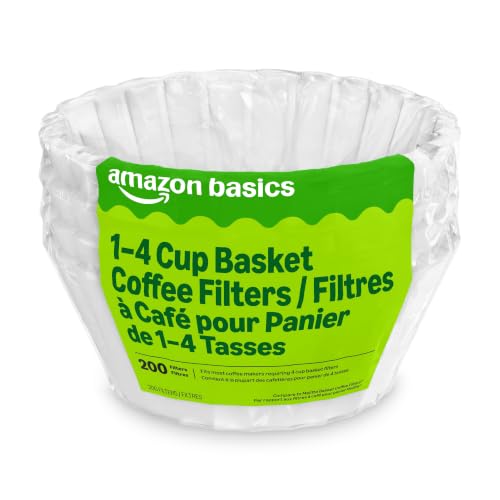 Amazon Basics 1-4 Cup Basket Coffee Filters |
9.1/10 | Buy |
| Best Value |
 LIS ADORN Stainless Steel Pour Over Coffee |
9.1/10 | Buy |
| Best Premium |
 AyeVision 100-Pack Portable Hanging Ear Drip |
8.9/10 | Buy |
 VAYRMEU #2 Cone Coffee Filters (100-Pack) |
8.8/10 | Buy | |
 Lis Adorn 8-12 Cup Reusable Coffee Filter |
8.8/10 | Buy | |
 CARGEN 100-Pack Hanging Ear Drip Coffee Filter |
8.8/10 | Buy | |
 Amazon Basics 8-12 Cup Basket Coffee Filters |
8.6/10 | Buy | |
 Perfect Pod Café Save Reusable Cups (4-Pack) |
8.3/10 | Buy | |
 Bluelark 50-Count Hanging Ear Coffee Filter Bags |
8.1/10 | Buy |
Defutay 1-4 Cup Basket Filters (100-Pack)
Crafted from unbleached natural pulp, these small basket filters feature a wavy, flat-bottomed profile engineered to maintain shape and promote uniform extraction. They offer an eco-conscious, compostable solution tailored specifically for compact 1 to 4 cup brewers.
Pros
- Biodegradable, unbleached natural pulp construction
- Fluted walls resist collapsing during hot water brewing
- Flat-bottom base promotes balanced extraction
- Generous 100-count supply for small-batch brewing
Cons
- Incompatible with larger 8 to 12 cup carafes
- Limited to specific 155/45 basket-style holders
Amazon Basics 1-4 Cup Basket Coffee Filters
Designed for compact 1-4 cup automatic drip coffee makers, these Amazon Basics white basket filters provide clean sediment filtration and reliable fluted wall support for daily small-batch brewing. With ASTM D6868-11 commercial compostability and SFI certification, this 200-count pack delivers practical everyday value for small-pot coffee drinkers.
Pros
- Sized accurately for 1-4 cup basket drip coffee makers to prevent grounds overflow
- Certified to ASTM D6868-11 commercial composting standards and SFI certified (SFI-01675)
- Assembled in the USA from domestic and imported materials
- Generous 200-count pack delivers high daily economy for small-batch morning brewers
Cons
- Only fits 1-4 cup basket machines; incompatible with 8-12 cup brewers or cone-shaped drippers
- Commercial composting facilities accepting ASTM D6868-11 paper products may not be available in all municipal areas
LIS ADORN Stainless Steel Pour Over Coffee
The LIS ADORN Pour Over Coffee Dripper is a compact 1-2 cup manual brewer featuring a paperless 600-mesh dual-layer stainless steel filter and a heat-resistant silicone base. It is an excellent, low-waste choice for solo coffee drinkers, office desks, and travelers who want rich extraction without the recurring cost of paper filters.
Pros
- Dual-layer 600-mesh design significantly minimizes cup sediment without needing disposable paper cones
- Wide base with removable silicone ring provides stable seating on a wide range of mug and carafe diameters
- Heat-resistant silicone handle provides safe handling during and immediately after pouring hot water
- Dishwasher-safe, food-grade stainless steel body resists rust and simplifies daily maintenance
Cons
- Fine 20-micron mesh pores require a consistent medium-coarse grind to avoid slow drainage or clogging
- Manual pour-over brewing demands a separate hot water kettle and active pouring rather than one-touch operation
- Compact 1-2 cup capacity is strictly designed for single-mug prep and cannot brew large batches for multi-drinker households
AyeVision 100-Pack Portable Hanging Ear Drip
The AyeVision 100-pack hanging ear drip coffee filter bags offer a convenient single-serve pour-over solution crafted from glue-free PP and PET material. They are an ideal choice for travelers, campers, and office workers seeking fresh manual drip coffee without packing bulky brewing equipment.
Pros
- Eliminates the need to carry a separate plastic, ceramic, or glass pour-over cone dripper
- Glue-free, chemical-free bonded construction made from Japanese PP and PET material
- Folds flat and weighs practically nothing, making it easy to store in backpacks or desk drawers
- Bulk 100-count pack provides low cost per single-serve cup
Cons
- Compact 3.5 by 2.9 inch pouch size limits maximum dry grounds capacity compared to full-size pour-over cones
- Requires a steady, controlled kettle pour to prevent hot water and grounds from overflowing the opening
- Synthetic PP and PET material is not certified for backyard composting
VAYRMEU #2 Cone Coffee Filters (100-Pack)
Crafted from unbleached natural wood pulp, these #2 cone filters provide clean extraction without imparting chemical residues or paper odors. Integrated pull tabs streamline disposal, making morning pour-over and drip brewing tidy and compost-friendly.
Pros
- Unbleached wood pulp prevents off-flavors in coffee
- Pull tabs make ground disposal quick and clean
- Tear-resistant construction with uniform pore distribution
- Fully biodegradable and compostable material
- Fits standard 1 to 4 cup cone drippers
Cons
- May require doubling filters if brew tastes too light
- Allows up to a 0.2-inch manufacturing size tolerance
- Not designed for large or basket-style brewers
Lis Adorn 8-12 Cup Reusable Coffee Filter
Designed for standard flat-bottom drip machines, this Lis Adorn reusable basket filter eliminates the recurring waste and cost of paper liners. Its stainless steel micro-mesh allows aromatic coffee oils to pass through for a fuller-bodied brew while keeping fine grounds out of the carafe.
Pros
- Durable surgical-grade stainless steel mesh
- Top-rack dishwasher safe for easy cleaning
- Reinforced rim resists heat warping
- Broad compatibility with popular basket brewers
Cons
- Incompatible with cone-shaped coffee makers
- Requires manual emptying and rinsing after use
- Includes only one filter per package
CARGEN 100-Pack Hanging Ear Drip Coffee Filter
CARGEN Hanging Ear Drip Coffee Bags provide an ultra-compact single-serve pour-over solution made from thick, adhesive-free non-woven fabric. They are ideal for travelers, campers, and office workers wanting fresh drip coffee without carrying bulky brewing gear.
Pros
- Ultra-lightweight and packable design requires no external dripper stand or brew gear.
- Glue-free, food-grade non-woven fabric holds up well under hot water without leaking fine grounds.
- Accommodates a wide dose range from 8 to 20 grams across standard 6 cm to 9 cm mug rims.
- Convenient heat-seal capability allows preparing pre-measured DIY travel coffee packs in advance.
Cons
- Mug rim diameter must be between 6 cm and 9 cm, making them incompatible with oversized wide-mouth camping mugs or tiny espresso cups.
- Lower-profile mugs can submerge the bottom of the filter bag in brewed coffee, shifting extraction into partial immersion.
- Pours must be done slowly in stages since the narrow bag interior holds limited water volume at a time.
Amazon Basics 8-12 Cup Basket Coffee Filters
Designed for standard 8-12 cup automatic drip machines, these Amazon Basics white basket filters provide dependable sediment filtration for a smooth, grit-free morning cup. Their industrially compostable, SFI-certified paper build delivers reliable daily batch brewing economy.
Pros
- Compatible with most standard 8-12 cup flat-bottom basket drip coffee makers
- Provides clean cup clarity by catching fine coffee silt and grounds
- SFI certified and meets ASTM D6868-11 industrial compostability standards
- Generous 200-count supply offers reliable everyday batch brewing economy
Cons
- Not compatible with cone-style drip makers, pour-over cones, or single-serve brewers
- Requires access to industrial composting facilities that may not exist in all communities
- Thin paper sheets must be separated carefully from the stack to avoid accidentally brewing with two filters
Perfect Pod Café Save Reusable Cups (4-Pack)
Designed for Keurig brewers, these refillable capsules let coffee drinkers brew their own fresh grounds while eliminating single-use plastic waste. The snap-lid design works right out of the box without requiring extra adapters or complicated setup.
Pros
- Broad compatibility across Keurig 1.0 and 2.0 models
- 100 percent BPA-free and reusable construction
- Simple snap lid requires no separate adapter
- Allows using custom fresh coffee grounds
Cons
- Requires manual emptying and washing after each brew
- Supports single-stream brewers rather than multi-stream models
Bluelark 50-Count Hanging Ear Coffee Filter Bags
Bluelark Hanging Ear Coffee Filter Bags deliver a convenient single-serve pour-over method using heat-resistant non-woven fabric. They are a practical choice for campers, travelers, and office workers seeking fresh drip coffee without hauling a bulky dripper cone.
Pros
- No coffee maker, dripper cone, or French press required to brew a fresh cup
- Non-woven fabric construction eliminates standard paper taste without pre-rinsing
- Hanging ears fit securely over standard mug rims for stable manual pouring
- Lightweight and compact 75x90mm footprint fits easily into travel bags or backpacks
Cons
- Compact pouch opening requires a slow, careful pour to prevent water or grounds from overflowing
- Designed strictly for single-serve cups rather than multi-cup batch brewing
- May struggle to span extra-wide mug rims or oversized camping vessels
Dosing Filter Coffee: Ratios, Basket Sizing, and Extraction Dynamics
Finding the ideal balance between ground coffee and brewing water is the single most effective way to eliminate muddy bitterness and weak flavors. Standard brewing guidelines generally recommend a brew ratio between 1:15 and 1:17, meaning one gram of coffee for every fifteen to seventeen grams of water. In everyday kitchen terms, that translates to roughly one to two level tablespoons of ground coffee for every six ounces of water. Nailing this baseline ensures proper saturation across the entire filter bed while preventing messy overflows during the brew cycle.
The Golden Ratio: Grams Versus Kitchen Tablespoons
Precision in coffee dosing begins with understanding the difference between weight and volume measurements. Using a digital kitchen scale measuring in grams eliminates the inconsistency caused by bean size, roast level, and grind coarseness. A standard 1:16 ratio serves as the most dependable starting point for automatic drip machines and manual pour-over cones alike. This proportion allows hot water to dissolve sweet and aromatic flavor compounds without pulling harsh, astringent tannins from the spent grounds.
Volumetric scoops and tablespoons offer convenient morning speed, but they carry inherent variance that alters cup strength. Dark roasted beans expand during roasting and become significantly less dense than compact light roasts, meaning a level tablespoon of dark roast weighs less than a tablespoon of light roast. When relying on scoops, aim for two level tablespoons per six fluid ounces of fresh water for a medium-strength cup. If the resulting brew tastes thin or overly sharp, increasing the dose slightly brings out richer sweetness and deeper body.
Decoding Coffee Maker Cups Versus Standard Fluid Ounces
One of the most frequent mistakes home brewers make is confusing coffee maker cup markings with standard eight-ounce measuring cups. Most automatic drip carafes define a single cup as five to six fluid ounces of liquid, which equals roughly 150 milliliters. Pouring water up to the four-cup mark on a standard carafe actually yields twenty to twenty-four ounces of brewed coffee rather than thirty-two ounces. Failing to account for this smaller measurement frequently causes brewers to under-dose their ground coffee, producing watery results.
Calculating your coffee dose based on actual ounces or milliliters keeps your extraction consistent regardless of machine brand. For a standard eight-cup carafe holding forty to forty-eight ounces of water, you will typically need around forty-five to fifty-five grams of medium-ground coffee. That equates to roughly eight to ten level tablespoons depending on your preferred brew strength. Paying close attention to the actual capacity of your water reservoir prevents disappointing batches and guarantees a satisfying morning cup.
Dosing Capacities for Small Baskets and Number Two Cone Filters
Compact brewing setups require strict dosing boundaries to prevent hot slurry from escaping over the filter rim. Standard 1-4 cup flat-bottom basket liners, such as those produced by DEFUTAY or Amazon Basics, are designed to hold between fifteen and twenty-eight grams of ground coffee. Similarly, classic number two cone filters, like VAYRMEU unbleached paper cones, comfortably manage doses for one to four small cups. Loading more than thirty grams into these smaller filters severely restricts headspace and invites messy overflows during the initial brew pulse.
When brewing single servings or two small cups in a compact basket, a dose of fifteen to twenty grams provides ideal bed depth. This quantity creates a bed deep enough to force water through the coffee rather than channeling down the side of the paper. Proper seating of the filter against the basket wall ensures that the slurry remains centered over the drainage holes. Maintaining at least an inch of clearance beneath the filter rim protects your countertop from unexpected morning spills.
Ground Volumes for Standard Eight to Twelve Cup Drip Brewers
Large automatic drip machines rely on wider basket geometry to accommodate higher volumes of water and ground coffee. Full 8-12 cup flat-bottom paper liners, including Amazon Basics basket filters, easily handle larger doses ranging from fifty to seventy grams. Permanent gold-tone mesh baskets, such as the LIS ADORN 8-12 cup reusable filter, feature rigid frames and reinforced sidewalls designed for these larger batches. These high-capacity filters allow home brewers to prepare a full carafe for family gatherings or busy office mornings without compromising flow rate.
Achieving balanced flavor in a full twelve-cup brew requires keeping the ground coffee bed level before starting the machine. Uneven piles of coffee cause hot water from the showerhead to carve channels through shallow spots while bypassing deeper sections. Spreading approximately sixty grams of medium-ground beans evenly across the flat bottom of an 8-12 cup filter encourages uniform extraction. This even contact ensures that all grounds contribute their aromatic oils and soluble flavors to the finished carafe.
Single-Serve Portions: Reusable Pods and Hanging Ear Pouches
Single-serve brewing formats demand tighter dosing parameters due to their compact interior dimensions. Refillable capsules like the Perfect Pod Cafe Save reusable pod cups hold between nine and twelve grams of medium-ground coffee. Overpacking these small capsules prevents the brewer lid from piercing properly or causes water to bypass the pod entirely. Keeping the grounds loose without hard tamping allows pressurized hot water to penetrate the bed evenly and extract full flavor within seconds.
Portable hanging ear drip bags, including designs from CARGEN, AyeVision, and Bluelark, provide convenient single-cup filtration for travel or office desks. These non-woven fabric pouches generally accommodate eight to fifteen grams of coffee grounds, with some sturdy designs holding up to twenty grams. If you are exploring various brewing styles, our Americano coffee history and ratio guide outlines how espresso and drip proportions compare when building balanced single-cup drinks. Adding grounds past the recommended fill line in hanging ear bags risks collapsing the cardboard hooks into your mug.
How Filter Materials Alter Dosing and Extraction Flow
The material composition of your filter dramatically influences how water flows through the coffee bed and how much coffee you should use. Natural paper filters, like unbleached virgin pulp cones, feature tight cellulose fibers that trap insoluble micro-fines and natural diterpene oils. This dense barrier produces a sparkling, sediment-free cup with high clarity but creates higher flow resistance. If you choose paper, sticking to standard medium grinds and moderate doses prevents the filter pores from clogging during prolonged drawdowns.
Reusable stainless steel filters, such as the LIS ADORN pour-over dripper with double micromesh construction, behave quite differently from disposable paper. The etched metal mesh permits aromatic coffee oils and tiny suspended particles to pass into the carafe, resulting in a heavier body and richer mouthfeel. Because metal mesh offers lower drainage resistance, brewers often use slightly larger doses or medium-coarse grounds to slow water passage. Pairing quality filters with fresh, responsibly sourced beans from our guide to choosing clean coffee beans enhances clarity across both metal and paper mediums.
Managing Bed Depth and Preventing Brew Basket Overflows
Maintaining the proper bed depth inside the filter basket is essential for preventing catastrophic kitchen messes and weak coffee. When ground coffee meets hot water, it expands rapidly during the degassing phase known as the bloom. If the dry grounds fill more than half the total height of the filter, the blooming slurry can rise over the top edges. This overflow bypasses the filter medium entirely, dumping coarse grounds into the carafe and clogging brewer valves.
A healthy coffee bed should generally occupy between one-quarter and one-third of the total filter height before brewing begins. This empty space, called headspace, gives incoming water room to pool gently and disperse evenly across the grounds. Seating the paper filter snugly against the basket walls and pre-folding crimped seams reinforces the filter structure against hydrostatic pressure. Taking ten seconds to level the dry grounds before hitting the brew switch keeps the extraction smooth, safe, and clean.
Adjusting Doses for Different Roast Profiles and Grind Sizes
Bean density changes drastically throughout the roasting process, directly impacting how grounds pack within a filter basket. Light roast beans remain dense, hard, and less porous, allowing water to flow past particles more slowly unless ground slightly coarser. Dark roast beans puff up during prolonged heat exposure, developing larger pores and brittle cell structures that extract much faster. Because dark roasts give up their soluble flavors rapidly, backing off your dose by one or two grams prevents unpleasantly charred and bitter over-extraction.
Grind size distribution works hand in hand with your dry coffee dose to regulate drawdown timing and flow velocity. Using an excessively fine grind with a heavy dose creates high flow resistance that blinds paper pores and causes water to stall in the basket. Coarser grinds permit water to pass rapidly, which requires a slightly deeper coffee bed to maintain adequate contact time. Matching your ground particle size to both the dose weight and the filter porosity ensures uniform extraction from start to finish.
Troubleshooting Extraction Defects Caused by Incorrect Dosing
Recognizing the sensory clues of incorrect coffee dosing helps you correct brewing errors before wasting valuable beans. If your brewed coffee tastes noticeably sour, salty, or hollow with a watery consistency, you are likely under-dosing your filter. Under-dosing allows water to rush through the bed too quickly, failing to extract sufficient sweetness and body from the beans. Increasing your dry coffee dose by two to four grams deepens the bed and extends contact time to balance the flavor.
Over-dosing creates the opposite problem, resulting in an intensely bitter, dry, and astringent cup that leaves a harsh aftertaste. Packing too much coffee into the filter forces water to linger excessively in the bed, dissolving undesirable wood lignins and bitter compounds. In severe cases, an oversized coffee bed stalls the drainage entirely, causing the brew basket to back up with dark liquid. Reducing your coffee volume slightly restores an optimal flow rate and brings back bright, aromatic cup characteristics.
Calibration Steps for Consistent Daily Brewing
Building a repeatable morning brewing routine starts with choosing a single measurement method and sticking to it. Begin by measuring your water volume accurately using a kitchen scale or a graduated liquid measuring cup. Next, apply a standard 1:16 ratio by dividing the total water weight in grams by sixteen to find your ideal coffee dose. For example, brewing five hundred grams of water requires approximately thirty-one grams of ground coffee for a balanced extraction.
Once you establish your baseline dose, taste the finished brew carefully and make small, incremental adjustments based on your personal palate. If you prefer a bolder, heavier mouthfeel, tighten your ratio toward 1:15 by adding an extra gram or two of coffee. If you favor a lighter, tea-like profile with pronounced floral notes, widen the ratio toward 1:17. Keeping your grind size consistent while tweaking only the dry dose ensures you can reliably dial in the perfect cup every morning.
About the author
Jason Sarley is a coffee professional, writer, roaster, and licensed Q Grader with extensive experience in cupping and coffee evaluation. He also holds professional roasting credentials and has worked closely with innovative brewing technology, giving him practical insight into how brewing equipment, extraction methods, and coffee quality come together in the cup.