
How to Use a Handheld Milk Frother for Coffee: Practical Guide for 2026
Learn how to use a handheld milk frother for coffee to create silky cafe microfoam and smooth cold foam in this November 2026 guide for home drinks.
 By Kenneth Davids
Updated November 5, 2026

Transforming an ordinary morning brew into a velvety cafe latte often comes down to liquid turbulence and temperature control. Many coffee drinkers end up with uneven soap-like bubbles or splatters across the counter simply because the motorized whisk spins faster than expected in shallow mugs. Understanding how to use a handheld milk frother for coffee allows you to incorporate tiny air bubbles evenly throughout your liquid base instead of separating into thin liquid below a stiff, dry cap. Using compact, high-speed motorized wands remains one of the simplest entry points to specialty coffee drinks without investing in bulky countertop espresso machinery.
Achieving a smooth texture requires matching your submersion depth with the vortex created by high-spin motor coils. Whether you work with whole dairy milk heated to the ideal 140°F to 155°F window or chilled oat milk for an afternoon iced latte, steady hand positioning makes all the difference. Exploring creative ways to use a frother shows how these compact tools handle everything from sweet cream toppers to smooth powdered drink mixtures. With a few deliberate adjustments to your angle and timing, you can craft glossy microfoam that elevates every cup.
| Award | Product | GCG Score About GCG ScoreThe GCG Score is our own rating from 0 to 10, based on performance, design and build, ease of use, and value. It reflects independent research and is never influenced by manufacturers, retailers, or affiliate commissions. Learn more › | |
|---|---|---|---|
| Best Overall |
Zulay Kitchen Handheld Milk Frother Wand
|
9.2/10 | Buy |
| Best Budget |
 CIRCLE JOY Rechargeable Milk Frother |
8.6/10 | Buy |
| Best Premium |
 BASECENT Handheld Battery Operated Milk Frother |
8.4/10 | Buy |
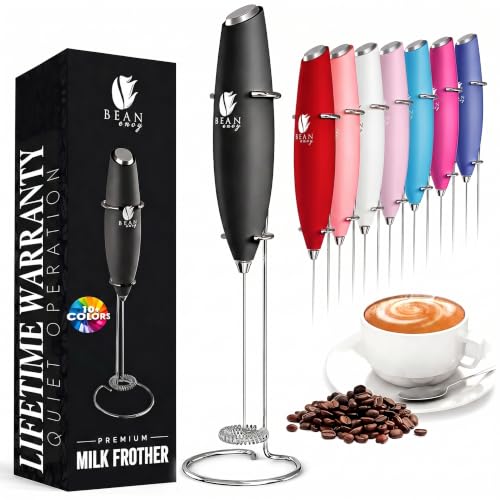 Bean Envy Handheld Milk Frother Wand with Stand |
8.1/10 | Buy | |
| Best Value |
 Zulay Kitchen Handheld Milk Frother Electric |
8.0/10 | Buy |
Zulay Kitchen Handheld Milk Frother Wand
The Zulay Kitchen handheld milk frother is a compact, battery-powered drink mixer featuring a 13,000 RPM motor and a 26-coil whisk head. It is a practical, budget-friendly option for home coffee drinkers, matcha fans, and apartment dwellers who want quick cold foam or smooth powder mixing without taking up counter space.
Pros
- Includes 2 AA batteries in the box for immediate use without an extra shopping trip
- High-speed 13,000 RPM motor blends powders and froths milk in seconds
- Compact design easily stores in shallow kitchen drawers, freeing up counter space
- Effortless cleanup by running the whisk head under tap water and pulsing briefly
- Backed by Zulay Kitchen's manufacturer lifetime guarantee
Cons
- Does not heat milk, requiring separate microwave or stovetop warming for hot lattes
- Single-speed push button lacks variable speed control for gentler stirring
- Motorized handle is not water-resistant and cannot be submerged or washed in a dishwasher
CIRCLE JOY Rechargeable Milk Frother
Equipped with a dual-spring whisk and USB-C charging, this portable frother quickly whips up dense foam for lattes and matcha. A dedicated storage tube keeps the wand protected and clean, making it a practical choice for home or travel.
Pros
- Convenient USB-C rechargeable design
- Dual-spring whisk produces thick foam quickly
- Protective travel tube keeps the whisk clean
- Durable food-grade stainless steel shaft
Cons
- Handle is not waterproof and must stay dry
- Charging port must be completely dry before recharging
BASECENT Handheld Battery Operated Milk Frother
The BASECENT Handheld Milk Frother is a cordless, battery-operated drink mixer featuring an all-stainless steel body, a 21,000 RPM motor, and a double coil whisk. It provides rapid aeration for morning lattes, matcha, and cold foam, making it a practical pick for compact coffee bars and budget-conscious shoppers.
Pros
- Durable food-grade stainless steel housing provides better build quality than plastic alternatives
- High-speed 21,000 RPM motor paired with a double-ring whisk creates foam rapidly
- Detachable whisk assembly simplifies post-use cleaning and protects the battery housing
- Includes a dedicated 12 oz (350 ml) stainless steel frothing pitcher for everyday workflow
- Flat top-button design allows the unit to rest upright on flat surfaces without a separate stand
Cons
- Does not heat milk, requiring microwave or stovetop preheating for warm coffee beverages
- Battery-operated design lacks rechargeable USB power and experiences reduced torque as batteries drain
- Single fixed high-speed setting can cause liquid splattering in shallow or wide-mouth mugs
Bean Envy Handheld Milk Frother Wand with Stand
The Bean Envy Handheld Milk Frother is a lightweight, battery-operated drink mixer featuring a brisk 19,000 RPM motor and a dedicated countertop stand. It provides a simple, space-saving solution for coffee drinkers who want quick cold foam, textured milk, or clump-free matcha without buying an expensive countertop machine.
Pros
- Brisk 19,000 RPM motor whips up cold foam and dissolves powders quickly
- Included upright stand keeps the whisk clean and saves counter and drawer space
- Ergonomic, non-slip silicone grip is comfortable, balanced, and lightweight at 0.13 pounds
- Cordless design offers great portability for office desks, road trips, and small apartments
- Simple cleanup takes only seconds by spinning the whisk tip in warm water
Cons
- Requires two AA batteries that are not included in the box and will need periodic replacement
- Motorized handle is not waterproof and must never be submerged or rinsed under running water
- Single high-speed setting requires careful wand positioning to avoid splattering in shallow cups
Zulay Kitchen Handheld Milk Frother Electric
The Zulay Kitchen handheld milk frother provides quick aeration and mixing with a 13,000 RPM motor powered by two included Duracell batteries. It is an affordable, compact tool for coffee fans wanting fast cold foam, frothed milk, or lump-free matcha without losing counter space.
Pros
- Fast 13,000 RPM motor and 25-spiral whisk head provide prompt agitation for coffee and powdered drinks
- Comes with two brand-name Duracell batteries included so you can start frothing immediately
- Extremely compact and lightweight at roughly 0.2 pounds for effortless drawer storage or travel
- Backed by the manufacturer with a lifetime guarantee for long-term buyer peace of mind
Cons
- Does not heat milk, requiring liquids to be warmed separately in a microwave or saucepan for hot beverages
- Motor handle is not waterproof and must be wiped clean with a damp cloth rather than submerged or put in a dishwasher
- Operates at a single speed, which requires careful depth management to avoid splashing in shallow cups
Mastering Handheld Milk Frother Technique for Cafe-Quality Coffee
Operating a motorized drink wand looks straightforward at first glance, but achieving a silky microfoam requires precise control over fluid dynamics and aeration timing. Handheld frothers rely on high-speed rotational shear to fold air into liquid proteins and fats, creating a dense suspension rather than loose surface bubbles. When you master the interaction between wand depth, container tilt, and motor speed, you can craft pourable milk textures suitable for specialty lattes or thick cold foams right at your home coffee station.
Essential Mechanics of the Motorized Frothing Wand
Handheld frothers differ fundamentally from steam wands and automatic electric jugs because they introduce cold kinetic energy rather than thermal expansion. Small internal electric motors drive a central stainless steel shaft that spins between 13,000 and 21,000 revolutions per minute depending on the model. This intense rotational velocity forces liquid outward while drawing air downward into a central vortex. The rapid movement shears larger air pockets into microscopic bubbles, transforming ordinary milk into a velvety texture in under thirty seconds.
Whisk architecture directly influences how quickly this emulsion develops. Basic models utilize a single circular wire coil wound tightly around a stabilizing loop to generate moderate turbulence. Upgraded models feature dual-spring whisk heads that double the contact surface area, which helps accelerate foam production in dense liquids like whole milk or heavy whipping cream. Understanding your wand’s specific whisk configuration helps you gauge how aggressively it pulls air into your cup during operation.
Choosing the Right Frothing Vessel and Liquid Volume
Selecting an appropriate container prevents kitchen messes and ensures adequate space for liquid expansion. Milk typically expands between fifty and one hundred percent of its original volume as air integrates into the liquid. Pouring three to four ounces of milk into a standard eight-ounce mug often leads to rapid overflow once the motor reaches full operational speed. Dedicated stainless steel frothing pitchers with straight or tapered walls provide the necessary vertical clearance to contain rising foam safely.
Container width also plays a decisive role in establishing a stable fluid vortex. Wide, shallow bowls or oversized mugs spread the milk too thin, exposing the spinning whisk coil and generating violent splashes. Narrow cylindrical vessels force the liquid to climb the walls in an organized whirlpool, pulling surface air cleanly downward into the whisk. When frothing directly in a coffee mug, choose taller, narrower ceramic vessels and fill them no more than one-third full before engaging the motor.
Milk Temperature Baselines and Protein Denaturation
Temperature dictates how milk proteins react when exposed to mechanical shear. For hot beverages, dairy milk textures best when heated to a baseline between 140°F and 155°F before you begin frothing. Within this specific thermal window, whey proteins denature gently and unfold to create a protective membrane around tiny air bubbles. Warming milk also increases perceived sweetness by breaking down complex lactose structures without requiring added sweeteners.
Exceeding 160°F during heating breaks down these delicate protein chains entirely and degrades your beverage quality. Overheated milk develops scorched, sulfurous off-flavors and loses its ability to trap air, resulting in watery foam that collapses within seconds. Stovetop pots or microwave heating should be monitored with a digital kitchen thermometer to avoid burning delicate dairy sugars. You can also explore clever milk frother techniques to discover alternative heating shortcuts and prep methods for consistent results.
Cold foam preparation requires the opposite thermal approach. Dairy liquids must remain thoroughly chilled between 35°F and 40°F straight from the refrigerator until the exact moment of aeration. Chilled milk fats remain solid, providing structural scaffolding that traps mechanical air bubbles without thermal assistance. Warm dairy placed into a cold foam recipe will churn unevenly, separating into greasy film rather than creating a velvety, spoonable topper.
Step-by-Step Frothing Procedure: From Surface Stretch to Deep Roll
Proper preparation ensures a smooth workflow and prevents accidental counter spills. Begin by pouring your heated or chilled liquid into a clean, dry pitcher or tall cup. Submerge the whisk head completely beneath the liquid surface before pressing the power button. Turning on a high-speed motorized wand in midair or while hovering near the top rim creates an immediate spray of hot liquid.
Once the motor engages, bring the whisk coil just beneath the surface to initiate the stretching phase. You should hear a soft, intermittent hissing sound as the spinning coil draws small gulps of air into the liquid. Maintain this position for roughly five to eight seconds, watching the liquid volume expand inside the pitcher. Avoid lifting the whisk head entirely out of the milk, as breaking the surface tension introduces large, unstable macrobubbles.
Transition into the rolling phase by lowering the whisk head deeper toward the midpoint of the pitcher. Tilt your vessel slightly at a fifteen to twenty-degree angle to establish a smooth circular whirlpool. This rolling action pulls the newly introduced surface air down into the lower liquid layer, pulverizing coarse bubbles into microscopic microfoam. Hold the wand steady in this vortex for fifteen to twenty seconds without moving it vigorously up and down.
Conclude the process by releasing the power switch or pressing the off button while the whisk remains submerged. Wait until the spinning head comes to a complete standstill before lifting the wand out of your container. Tap the bottom of the pitcher firmly against a kitchen counter to pop any residual surface bubbles. Swirl the pitcher gently in a circular motion until the milk displays a glossy sheen resembling wet interior paint.
Managing Dairy Versus Plant-Based Milk Chemistry
Dairy milks behave predictably under mechanical shear due to their natural balance of casein proteins and butterfat. Whole milk produces the silkiest microfoam because its four percent fat content lubricates the bubble walls while whey proteins stabilize the structure. Low-fat and skim milks foam remarkably quickly because there are fewer heavy fat globules to weigh down the aeration process. However, skim milk foam tends to be stiff and dry, resembling shaving cream rather than velvety liquid suitable for pouring latte art.
Plant-based milks present unique biochemical hurdles because their protein and lipid profiles differ dramatically from cows’ milk. Standard grocery almond and oat milks often lack sufficient protein density, causing newly formed bubbles to burst almost instantly. Barista-edition plant milks resolve this limitation by incorporating dipotassium phosphate buffers and natural gums like gellan or acacia. These added stabilizers neutralize coffee acidity and reinforce bubble membranes, allowing plant milks to stretch into durable microfoam.
Soy milk remains one of the easiest non-dairy alternatives to froth because its native protein content closely mirrors whole dairy. When working with unbuffered soy milk, pour the frothed liquid slowly into warm coffee rather than piping hot espresso to prevent curdling. Oat milk requires gentle handling and slightly shorter aeration times to prevent thermal starch breakdown from turning the liquid gummy. Evaluating different handheld frother design considerations can help you choose a wand with enough motor torque to handle thicker plant-based emulsions.
Cold Foam Preparation for Iced Specialty Drinks
Cold foam has become an essential component of modern iced coffee drinks, providing a rich contrasting cap over chilled brew. Unlike steamed microfoam, cold foam relies almost entirely on emulsified butterfat rather than heat-denatured whey proteins to maintain structural rigidity. Handheld motorized wands excel at whipping small volumes of cold foam because their concentrated rotational speed shears cold fats efficiently. A single serving can be prepared in under twenty seconds directly in a small measuring beaker or glass.
A reliable home cold foam formula combines two tablespoons of heavy whipping cream with one tablespoon of whole milk and a splash of flavored syrup. Submerge your handheld frother to the bottom of the vessel and tilt the glass slightly to create a tight circular flow. Run the motor for fifteen to twenty-five seconds until the liquid thickens into a pourable consistency resembling melted soft-serve ice cream. Over-whipping past thirty seconds will turn the mixture into dense whipped butter, preventing it from floating gracefully across your drink.
Pouring cold foam requires gentle execution to prevent the dense dairy cap from plunging straight to the bottom of your iced beverage. Rest a spoon near the top rim of your coffee glass and slowly glide the cold foam over the back of the spoon. This technique disperses downward momentum, allowing the velvety foam to float cleanly on top of the dark coffee layer. The resulting drink delivers a smooth, sweet sip of chilled foam followed immediately by bold espresso.
Advanced Emulsification: Matcha, Syrups, and Drink Powders
Motorized drink wands serve as versatile kitchen emulsifiers well beyond basic milk foaming duties. Fine powders like ceremonial green tea matcha tend to form stubborn clumps when stirred with a traditional spoon. The rapid rotational shear of a frother coil breaks apart compacted matcha particles within seconds, suspending them evenly throughout warm water. This mechanical action creates a traditional jade-green froth that mimics the results of a bamboo whisk with far less manual effort.
Nutritional supplements such as unflavored collagen peptides, protein powders, and powdered greens also blend effortlessly with high-speed wands. When mixing dense powders, start with a small splash of liquid to create a smooth, clump-free slurry before filling your glass. Submerge the whisk completely to avoid kicking dry powder into the air when the motor initiates. Once the paste dissolves smoothly, add the remaining liquid and run the frother for an additional ten seconds to complete the blend.
Proper Cleaning, Storage, and Battery Care
Maintaining hygienic equipment prevents stale milk residue from accumulating inside the tight coils of your frothing whisk. Immediate cleaning is the easiest path, as dried milk proteins bind stubbornly to stainless steel surfaces within minutes. Submerge the whisk head into a cup of warm, soapy water immediately after serving your drink and run the motor for five seconds. Rinse the coil under running tap water and briefly spin it dry inside an empty sink to throw off lingering moisture.
Never submerge the motorized handle or place the entire unit in an automatic dishwasher. Moisture leaking into the internal housing will quickly corrode the electric motor, trigger switch, and battery terminals. Wipe down the exterior handle using a lightly dampened microfiber cloth and dry it thoroughly before storing. Storing the unit on an upright countertop stand or in a protective travel sleeve prevents the delicate stainless steel shaft from bending out of alignment.
Power supply maintenance ensures your frother maintains consistent rotational torque under liquid drag. Battery-operated wands using disposable alkaline cells gradually lose RPM as voltage drops, resulting in sluggish whirlpools and longer foaming times. Rechargeable models with integrated lithium-ion cells maintain peak rotational speed until the charge depletes, but require cautious handling around water. Always verify that USB charging ports are completely dry before connecting a power cable to prevent electrical shorting.
Common Frothing Pitfalls and How to Fix Them
Home baristas often struggle with large, dry bubble formations that sit like an immovable cap atop their espresso. This issue occurs when the whisk coil spends too much time breaking the liquid surface, drawing in coarse air pockets rather than refining them. You can correct this by limiting your surface stretching phase to no more than eight seconds before plunging deeper into the pitcher. Swirling and tapping the pitcher immediately after frothing will also help reintegrate loose foam back into the liquid body.
Another frequent challenge involves motor stalling or significant speed loss when blending thicker liquids. High-fat mixtures like pure heavy cream or cold coconut milk exert substantial hydrodynamic drag on small electric motors. If your wand bogs down, angle the whisk toward the outer perimeter of the pitcher where liquid resistance is slightly lower. Switching to fresh batteries or recharging the internal lithium cell restores optimal rotational velocity to power through viscous liquids.
Rapid foam separation in hot coffee usually stems from thermal shock or severe acidity mismatches. Pouring delicate frothed milk into scalding, highly acidic light-roast coffee can break the protective protein bonds instantly. Allow your brewed coffee to rest for one minute to cool slightly below 160°F before gently pouring your textured milk. If using plant-based alternatives, selecting a carton fortified with acidity buffers prevents unappealing curds and ensures smooth, lasting foam integration.
Mastering the technique behind a handheld frother bridges the gap between home coffee brewing and genuine cafe beverage quality. Paying close attention to your milk starting temperatures, container geometry, and the two-stage aeration process yields glossy, velvety microfoam with every attempt. With consistent practice and proper tool maintenance, a simple motorized wand becomes an indispensable instrument in crafting exceptional specialty drinks every morning.
About the author
Kenneth Davids is a veteran coffee writer, educator, and sensory expert with decades of experience evaluating specialty coffee. He has authored several influential books on coffee, covering brewing, buying, roasting, and quality assessment. His deep understanding of flavor, preparation methods, and coffee evaluation brings an experienced perspective to helping consumers make better-informed coffee choices. Davids has been involved with coffee since the early 1970s, has published three coffee books, and has led workshops and seminars on sourcing, evaluation and coffee communication internationally.